Nitrogen is usually a limiting nutrient in oligotrophic coral reef environments (concentrations <0.5 μM, (Atkinson et al., 1995)). It is mainly found as nitrate, ammonia and urea, and is needed for growth. Both internal and external nitrogen sources are available to corals. Indeed, urea and ammonia, two forms of nitrogen that are by‐ products of coral host metabolism, are not excreted and released by the symbiotic association, but are re‐used by the symbionts and transformed into photosynthates (Muscatine & D’Elia, 1978). The uptake of seawater inorganic nitrogen is also mediated by the symbionts, although the coral host has adapted to transport these molecules through its membranes (Grover et al., 2002; Godinot et al., 2009). The availability of nitrate (NO3–) and ammonia (NH4+), which are the two main forms of seawater inor- ganic nitrogen, is critical for coral growth and particularly important during heat‐stress (Godinot et al., 2011a). The latter study further showed that the stony coral Stylophora pistillata decreases its capacity to take up nitrogen under such conditions. However, this same coral species is able to maintain its photosynthetic capacity if nitrogen is sup- plied (Béraud et al., 2013). Thus, nutrient enrichment can maximize coral quality and quantity (Godinot et al., 2011b). In contrast to the supply of live prey, where the acquired nutrients are first available to the coral host, the artificial supply of inorganic nutrients primarily affects the symbionts hosted in the coral tissue. This occurs through an increase of protein, lipid and chlorophyll concentration in symbiont cells and by stimu- lating proliferation of the symbionts (reviewed by Houlbrèque & Ferrier‐Pagès, 2009). Nevertheless, nitrogen assimilated by the symbionts is rapidly translocated to the coral host (Piniak & Lipschultz, 2004). Nitrogen enrichment only works up to a certain level, above which eutrophication problems (chaotic development of bacteria, phytoplankton and algae) may affect the culture system. In addition, although most corals readily use inorganic nitrogen, both ammonia and nitrate are highly toxic to most marine life and can damage sensitive animal tissues at high concentrations (Muller‐Parker et al., 1994; Grover et al., 2003).















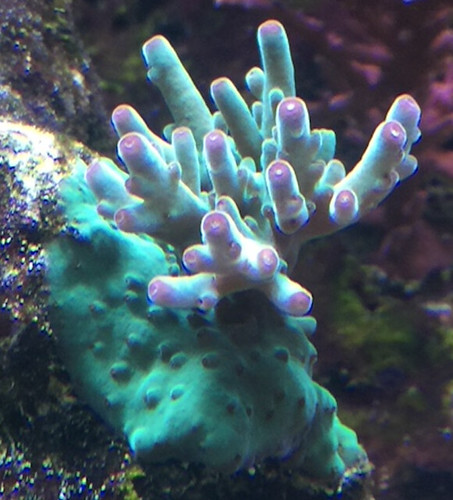


 I give Dana a lot of trouble for studying Priotes when I would gladly send him 3-4 dozen frags of acropora for him to study with.
 . No one does these feed studies with acropora. One of the few papers I could find was a study on elevated phosphates increasing calcification rates in staghorn acropora.











