Help please... Stuck in an unbreakable cycle.

I was in a similar situation once. Had dino, gha, red slime algae. It was bad.
I ended up taking out all the live rock and scrubbing them. Did a whole new aquascape.
Then started doing weekly 15g water changes for a few months (also have a 125g). Now i do one around every 3-4 weeks.
Made a DIY algae turf scrubber, added a bio brick (which is still there), made sure my skimmer was running efficiently. Upgraded equipment, including pumps and lighting. Added a nice size clean up crew.
In a couple months it looked like a completely different tank.
Now a few years later everything is still healthy, growing and I am happy staring into it all day :)
 
Last edited:
I have dealt with similar issues in the past (GHA + dinos). Here's how I dealt with it.

With rocks out of the tank removed algae with toothbrush (or something bigger), scrubbing in a bucket of tank water to remove as much as reasonable. Then dosed fluconazole (Reef Flux). GHA began to die, when it looked nice and weak I scrubbed it again. Then feeding reasonably heavy to get nutrients up which is now possible because no algae to suck it up immediately.

Solved my problem without blackouts or any other expensive interventions like UV. Fluconazole didn't hurt my inverts or corals.
 
I'll be blunt, very blunt. DO WATER CHANGES. FEED YOUR SYSTEM. Yes, algae will get worse, initially. But to get to the point where corals grow even with higher nitrients than you have now and dinos dissapear even with more water changes than you're doing now you have to work through shifting the equilibrium of the system. I would hesitate to dip too much rock in H2O2, it will kill a lot of algae but ti will also kill beneficial sponges you need to process the DOC in your system. I would do primarily manual removal with very judicious use of H2O2 to limit any sponge loss. Be patient.

Here's two threads I did on the local forum where I used just manual removal and water changes to shift the equilibrium of systems over run with nuisance algae.

I read through these, and it confirmed what i basically think the issue is with my tank. The volume of algae is too powerful of a nutrient sink to allow acceptable levels for the corals. I suppose i knew the answer was to physically remove the algae but i guess i was hoping there was a better way than taking out 200# of rock.
 
I was in a similar situation once. Had dino, gha, red slime algae. It was bad.
I ended up taking out all the live rock and scrubbing them. Did a whole new aquascape.
Then started doing weekly 15g water changes for a few months (also have a 125g). Now i do one around every 3-4 weeks.
Made a DIY algae turf scrubber, added a bio brick (which is still there), made sure my skimmer was running efficiently. Upgraded equipment, including pumps and lighting. Added a nice size clean up crew.
In a couple months it looked like a completely different tank.
Now a few years later everything is still healthy, growing and I am happy staring into it all day :)
Sounds like a very similar situation to mine. thank you
 
the right way to manage your large tank invasion issues (not an ammonia control issue, invasion issue) is to make one rock comply correctly in the bad condition tank, then once it complies you upscale what worked to the other rocks and rip clean the tank so that all the feed, clouding and waste fueling the current algae is gone.

dont buy and add dosers to a non clean tank with cloudy sand and rocks full of detritus, you'll chemically soup the setup. a rip clean tank has perfect params and zero clouding, do all the prevention work only in that setting. this is the price of large tanking, they must be physically accessed at times or you'll just cycle among gha, then dinos, then after dosing or boosting params for dinos you're back to 10 months of gha, then dosing vibrant gets you cyano, over and over. all of this comes from partial work vs handling the reef tank as a whole.

since its a big tank we save the rip clean for last, we should make a test rock work correctly. on your current scrubbing efforts you're leaving out the kill step so it grows back fast, like lawn mowing where you only cut the top 1/3'rd of the grass on the highest possible mower setting.

post a full tank shot of your tank, we select a rock, and we do the equivalent of digging up a 1x1' section of grass to the dirt, at the roots, then we squirt roundup on the dirt after its all been debrided lol.

see how that keeps the spot gone vs light mowing

don't worry we wont use roundup on the reef tank :)

post pics as the reef sits, from that we get additional details like using too much intense white light whereas more blues help lessen growth, these are the fine tuning options that pics give us along with pictures of potential waste storage areas/other small clues.

you'll mainly be working with one simple test rock for a couple weeks so that's easy, that's not hard at all.
 
I read through these, and it confirmed what i basically think the issue is with my tank. The volume of algae is too powerful of a nutrient sink to allow acceptable levels for the corals. I suppose i knew the answer was to physically remove the algae but i guess i was hoping there was a better way than taking out 200# of rock.

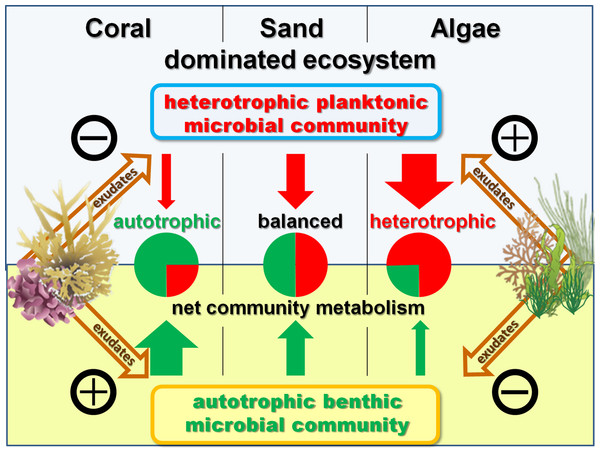
It's more than algae just being a nutrient sink. It varies significantly by species but algae is dumping hydrophilic and hydrophobic DOC into the water that promotes pathogenic shifts in coral holobionts/microbiomes. Skimmers and GAC won't remove the hydrophilic DOC (specifically the Dissolved Combined Neutral Sugars, DSCN). Sponges will process DOC (and the hydrophobic as well, 1000X faster than the bacterioplankton in ht ewater) but they process DOC from algae differently than from corals and with too much nuisance algae a negative feedback loop helps the algae but hurts the coral. Stripping the nutrients out of the water also makes it harder for corals to compete against the algae so corals are getting a hit on two fronts.

DOn't feel like you need to pull out all the rock. I'd actually try to disturb the system as little as possible. Remeber the sponges are helpful and the rock that doesn't have a lot of algae might only need a little brishing. If a rock sin't integral to the aquascaping and doesn't have any sponges on the back side and no corals of value on the lighted side and lots of hair algae I may just set it outside and let it dry out. In the first thread roughly a third of the rock was removed fromn the tank and scrubbed off in aquarium water and only a couple of the worst pieces were removed a 2nd and third time to be scrubbed in aquarium water. In the 2nd thread since it was so tall and seriously needed rescaping (the previous maintenence company just pilled the rock in) over half was removed and maybe about a fifth wasn't put back in.


To help understand the roles of corals and algae and microbial processes in reef systems I'd encourage you get the book and watch the accompanying video "Coral Reefs in the Microbial Seas" (Paper back is ~$20, Kindle is ~$10) Both deal with the conflicting roles of the different types of DOC in reef ecosystems. While there is overlap bewteen his book and the video both have information not covered by the other and together give a broader view of the complex relationships found in reef ecosystems

Here's some other videos you may find informative:

Changing Seas - Mysterious Microbes

Nitrogen cycling in hte coral holobiont

BActeria and Sponges

Maintenance of Coral Reef Health (refferences at the end)

Optical Feedback Loop in Colorful Coral Bleaching

Richard Ross What's up with phosphate"

And here's some additional links:

Phosphate Deficiency:
Nutrient enrichment can increase the susceptibility of reef corals to bleaching:

Ultrastructural Biomarkers in Symbiotic Algae Reflect the Availability of Dissolved Inorganic Nutrients and Particulate Food to the Reef Coral Holobiont:

Phosphate deficiency promotes coral bleaching and is reflected by the ultrastructure of symbiotic dinoflagellates

Effects of phosphate on growth and skeletal density in the scleractinian coral Acropora muricata: A controlled experimental approach

High phosphate uptake requirements of the scleractinian coral Stylophora pistillata

Phosphorus metabolism of reef organisms with algal symbionts


Sponge symbionts and the marine P cycle

Phosphorus sequestration in the form of polyphosphate by microbial symbionts in marine sponges

Indirect effects of algae on coral: algae‐mediated, microbe‐induced coral mortality

Influence of coral and algal exudates on microbially mediated reef metabolism.
Coral DOC improves oxygen (autotrophy), algae DOC reduces oxygen (heterotrophy).

Role of elevated organic carbon levels and microbial activity in coral mortality

Effects of Coral Reef Benthic Primary Producers on Dissolved Organic Carbon and Microbial Activity
Algae releases significantly more DOC into the water than coral.

Pathologies and mortality rates caused by organic carbon and nutrient stressors in three Caribbean coral species.
Starch and sugars (doc) caused coral death but not high nitrates, phosphates or ammonium.

Visualization of oxygen distribution patterns caused by coral and algae

Biological oxygen demand optode analysis of coral reef-associated microbial communities exposed to algal exudates
Exposure to exudates derived from turf algae stimulated higher oxygen drawdown by the coral-associated bacteria.

Microbial ecology: Algae feed a shift on coral reefs

Coral and macroalgal exudates vary in neutral sugar composition and differentially enrich reef bacterioplankton lineages.

Sugar enrichment provides evidence for a role of nitrogen fixation in coral bleaching

Excess labile carbon promotes the expression of virulence factors in coral reef bacterioplankton

Unseen players shape benthic competition on coral reefs.

Macroalgae decrease growth and alter microbial community structure of the reef-building coral, Porites astreoides.

Macroalgal extracts induce bacterial assemblage shifts and sublethal tissue stress in Caribbean corals.

Biophysical and physiological processes causing oxygen loss from coral reefs.

Global microbialization of coral reefs

Ecosystem Microbiology of Coral Reefs: Linking Genomic, Metabolomic, and Biogeochemical Dynamics from Animal Symbioses to Reefscape Processes

Differential recycling of coral and algal dissolved organic matter via the sponge loop.
Sponges treat DOC from algae differently than DOC from corals
 
the right way to manage your large tank invasion issues (not an ammonia control issue, invasion issue) is to make one rock comply correctly in the bad condition tank, then once it complies you upscale what worked to the other rocks and rip clean the tank so that all the feed, clouding and waste fueling the current algae is gone.

dont buy and add dosers to a non clean tank with cloudy sand and rocks full of detritus, you'll chemically soup the setup. a rip clean tank has perfect params and zero clouding, do all the prevention work only in that setting. this is the price of large tanking, they must be physically accessed at times or you'll just cycle among gha, then dinos, then after dosing or boosting params for dinos you're back to 10 months of gha, then dosing vibrant gets you cyano, over and over. all of this comes from partial work vs handling the reef tank as a whole.

since its a big tank we save the rip clean for last, we should make a test rock work correctly. on your current scrubbing efforts you're leaving out the kill step so it grows back fast, like lawn mowing where you only cut the top 1/3'rd of the grass on the highest possible mower setting.

post a full tank shot of your tank, we select a rock, and we do the equivalent of digging up a 1x1' section of grass to the dirt, at the roots, then we squirt roundup on the dirt after its all been debrided lol.

see how that keeps the spot gone vs light mowing

don't worry we wont use roundup on the reef tank :)

post pics as the reef sits, from that we get additional details like using too much intense white light whereas more blues help lessen growth, these are the fine tuning options that pics give us along with pictures of potential waste storage areas/other small clues.

you'll mainly be working with one simple test rock for a couple weeks so that's easy, that's not hard at all.
As soon as someone mentioned you I knew the words "rip clean" were going to be appearing in my thread lol. I have read large swaths of your rip clean thread and I washed my sand super super thoroughly when I transfered my reef to the new aquarium a year ago. I will post some pictures when i get home today and we can go from there. thanks for the reply
 
It's more than algae just being a nutrient sink. It varies significantly by species but algae is dumping hydrophilic and hydrophobic DOC into the water that promotes pathogenic shifts in coral holobionts/microbiomes. Skimmers and GAC won't remove the hydrophilic DOC (specifically the Dissolved Combined Neutral Sugars, DSCN). Sponges will process DOC (and the hydrophobic as well, 1000X faster than the bacterioplankton in ht ewater) but they process DOC from algae differently than from corals and with too much nuisance algae a negative feedback loop helps the algae but hurts the coral. Stripping the nutrients out of the water also makes it harder for corals to compete against the algae so corals are getting a hit on two fronts.

DOn't feel like you need to pull out all the rock. I'd actually try to disturb the system as little as possible. Remeber the sponges are helpful and the rock that doesn't have a lot of algae might only need a little brishing. If a rock sin't integral to the aquascaping and doesn't have any sponges on the back side and no corals of value on the lighted side and lots of hair algae I may just set it outside and let it dry out. In the first thread roughly a third of the rock was removed fromn the tank and scrubbed off in aquarium water and only a couple of the worst pieces were removed a 2nd and third time to be scrubbed in aquarium water. In the 2nd thread since it was so tall and seriously needed rescaping (the previous maintenence company just pilled the rock in) over half was removed and maybe about a fifth wasn't put back in.


To help understand the roles of corals and algae and microbial processes in reef systems I'd encourage you get the book and watch the accompanying video "Coral Reefs in the Microbial Seas" (Paper back is ~$20, Kindle is ~$10) Both deal with the conflicting roles of the different types of DOC in reef ecosystems. While there is overlap bewteen his book and the video both have information not covered by the other and together give a broader view of the complex relationships found in reef ecosystems

Here's some other videos you may find informative:

Changing Seas - Mysterious Microbes

Nitrogen cycling in hte coral holobiont

BActeria and Sponges

Maintenance of Coral Reef Health (refferences at the end)

Optical Feedback Loop in Colorful Coral Bleaching

Richard Ross What's up with phosphate"

And here's some additional links:

Phosphate Deficiency:
Nutrient enrichment can increase the susceptibility of reef corals to bleaching:

Ultrastructural Biomarkers in Symbiotic Algae Reflect the Availability of Dissolved Inorganic Nutrients and Particulate Food to the Reef Coral Holobiont:

Phosphate deficiency promotes coral bleaching and is reflected by the ultrastructure of symbiotic dinoflagellates

Effects of phosphate on growth and skeletal density in the scleractinian coral Acropora muricata: A controlled experimental approach

High phosphate uptake requirements of the scleractinian coral Stylophora pistillata

Phosphorus metabolism of reef organisms with algal symbionts


Sponge symbionts and the marine P cycle

Phosphorus sequestration in the form of polyphosphate by microbial symbionts in marine sponges

Indirect effects of algae on coral: algae‐mediated, microbe‐induced coral mortality

Influence of coral and algal exudates on microbially mediated reef metabolism.
Coral DOC improves oxygen (autotrophy), algae DOC reduces oxygen (heterotrophy).

Role of elevated organic carbon levels and microbial activity in coral mortality

Effects of Coral Reef Benthic Primary Producers on Dissolved Organic Carbon and Microbial Activity
Algae releases significantly more DOC into the water than coral.

Pathologies and mortality rates caused by organic carbon and nutrient stressors in three Caribbean coral species.
Starch and sugars (doc) caused coral death but not high nitrates, phosphates or ammonium.

Visualization of oxygen distribution patterns caused by coral and algae

Biological oxygen demand optode analysis of coral reef-associated microbial communities exposed to algal exudates
Exposure to exudates derived from turf algae stimulated higher oxygen drawdown by the coral-associated bacteria.

Microbial ecology: Algae feed a shift on coral reefs

Coral and macroalgal exudates vary in neutral sugar composition and differentially enrich reef bacterioplankton lineages.

Sugar enrichment provides evidence for a role of nitrogen fixation in coral bleaching

Excess labile carbon promotes the expression of virulence factors in coral reef bacterioplankton

Unseen players shape benthic competition on coral reefs.

Macroalgae decrease growth and alter microbial community structure of the reef-building coral, Porites astreoides.

Macroalgal extracts induce bacterial assemblage shifts and sublethal tissue stress in Caribbean corals.

Biophysical and physiological processes causing oxygen loss from coral reefs.

Global microbialization of coral reefs

Ecosystem Microbiology of Coral Reefs: Linking Genomic, Metabolomic, and Biogeochemical Dynamics from Animal Symbioses to Reefscape Processes

Differential recycling of coral and algal dissolved organic matter via the sponge loop.
Sponges treat DOC from algae differently than DOC from corals
That's a lot to dig into. Thank you for the replies.
 
I know rip cleaning a 125 is horrible that's last go-to effort/promise :)

at least it was recently cleaned agreed. our special rock handling has a decent chance too, much easier. lowering light intensity levels is sometimes a really unused hidden help, we're trained to go as strong as possible as quick as possible and you'd be amazed how well corals adapt to quality feeding and not so much intensity from the led sun at times, pics w help assessments.

a changeup on the rip clean option is also to remove this sandbed, get the reef under control without it (less waste catch and hold points) and the only put back sand sometime next year if you want the hassle all over again. that's final steps assessment in my opinion after we force one test rock to comply.

fluconazole is a strong candidate for large inaccessible tanks it's become a rather safe cheat but its also 100% linked with cyano for months after killing off gha and rotting it in the tank, so we're planning on it as a possible growback preventer only

not a mass killer, a growback preventer in a perfectly algae free reef that's prone to regrowth: does not cause cyano issues then.

everyone tries to avoid the manual work mode with it is the problem. if I was a large tank owner I'd have fluconazole alongside peroxide in my medicine cabinet. and in the valuables safe would be the 35% for serious jobs lol.
 
I know rip cleaning a 125 is horrible that's last go-to effort/promise :)

at least it was recently cleaned agreed. our special rock handling has a decent chance too, much easier. lowering light intensity levels is sometimes a really unused hidden help, we're trained to go as strong as possible as quick as possible and you'd be amazed how well corals adapt to quality feeding and not so much intensity from the led sun at times, pics w help assessments.

a changeup on the rip clean option is also to remove this sandbed, get the reef under control without it (less waste catch and hold points) and the only put back sand sometime next year if you want the hassle all over again. that's final steps assessment in my opinion after we force one test rock to comply.

fluconazole is a strong candidate for large inaccessible tanks it's become a rather safe cheat but its also 100% linked with cyano for months after killing off gha and rotting it in the tank, so we're planning on it as a possible growback preventer only

not a mass killer, a growback preventer in a perfectly algae free reef that's prone to regrowth: does not cause cyano issues then.

everyone tries to avoid the manual work mode with it is the problem. if I was a large tank owner I'd have fluconazole alongside peroxide in my medicine cabinet. and in the valuables safe would be the 35% for serious jobs lol.
Thank you. I did use fluconazole in combination with a 3 day blackout, which killed 90% of the algae but not all. At the time I did not have nearly as much gha though. However it just grew back eventually and I lost a bunch of corals. My lights are 3 Radion XR15 blues. I have them near full power except the red green and white channels are off. These lights have all channels shifted toward the blue spectrum already. From what I understand this setup is on the weak side for a 6’ tank, which is why I have them turned up high. I think most would use 3 xr30s at least if they wanted a lot of sps. I have no picky corals left so if you think I should turn them down I can.
 
This is the thread you’ll ultimately get directed to.

this doesn't apply to OP's issue at all...
 
It’s ok I thought too based on the title we had the classic api .25 issue

that link there is for naming start dates on tanks undergoing cycle buildup. This title here means invasion cycling yep.

Gobi let’s see pics of the tank, there’s always hidden details evident in pics
 
It’s ok I thought too based on the title we had the classic api .25 issue

that link there is for naming start dates on tanks undergoing cycle buildup. This title here means invasion cycling yep.

Gobi let’s see pics of the tank, there’s always hidden details evident in pics
Ill take some when i get home tonight
 
image.jpg
image.jpg
image.jpg
image.jpg

You asked for it.
 
you should create a bucket reef, or secure a 10 - 20 gallon nano to run as substrate testing. you'll never get anywhere experimenting with the tank as a whole unit unless its a one pass rip clean which we know to be a TON of work

so tell me about this option, see if plausible.

we take out one or two rocks and run the surgical rasping cleaning + peroxide used on the cleaned parts (not on tufts, they're gone)

this isn't brushing, brushing pestles the fragments of algae down into crevices and they regrow/vengeance

rasping is taking a metal knife tip and drag/dig/lift out the anchored algae from the rocks surgically until its 100% debrided and those algae strands are rinsed away down the sink with saltwater. peroxide goes as a spot treatment, not a dip, on the cleaned sections of the rock left a few mins to burn outside the tank, rinsed off in saltwater, set back in the tank see if that rejects regrowth longer than past runs did omitting the peroxide kill step/algaecidal step. this handling does not undo the cycle even if all rocks are done at once. we are just modeling here thankfully

in your test bucket reef/test nano circulated heated and preferably lit, so you're producing growing conditions in a tiny manageable container, you then proceed to dose fluconazole to an untreated rock, or perhaps a combo of a treated rock from above + a non treated one, you use the tiny nano to handle all your indirect assessments. if you dose Fluc to that tank as it sits I believe that algae will die, and then you'll have the world's biggest case of dinos mixed with cyano until next summer. that mass has to go

willingness to access isn't your problem you've been doing that, so attack some test rocks and anything you are contemplating dosing to the main tank can be side-tested in a paintbucket reef (all doses scaled down to five gals volume) and from that testing container you learn expected timing, growback issues, tradeoff issues etc vs having to jack the main tank up worse than it is.

side modeling saves you the most work, gains the most insight into how your surfaces present and respond. that's what pics tell me. your tank is directly in the throes of old tank syndrome/eutrophication though it is only a year old. something selected for plants vs hermatypic corals, so its time to attack but in a manageable scale first. your lighting is closer to the more white spectrum everyone likes vs the windex blue look which people don't like but suppresses green plant growth a little better, you'll have to experiment and decide if these current alignments are to remain or be changed in the new setup.

even the bucket models can be ran on straight blues vs whites to see if growback suppression occurs, mini model anything you think will work before upscaling to the main tank is what I'm offering to this eutrophication arrest job.

I feel this collection of challenges best matches your pic layout

I would specifically eject all sand among these rocks if we wind up rip cleaning. sand goes back in months after a delayed forced control over the rocks. You may need to resort to rasping, peroxide, then fluc as a growback preventer in the presence of zero mass and no sand in order to win.
 
Additional standouts: that’s the classic rock stack

inaccessible, the bottom rocks don’t get worked much because eighty pounds of other rocks sit on top, allows for clouding/ non cleaned detritus catchments and current flow limitation + still zones. Any disturbance of sand in that tank near rocks will kick up a cloud, that’s algae fuel. That clouding needs to go, fluconazole can’t remove it, vibrant can’t remove it, they’re bandaids

consider losing 50% of that rock, your cycle isn’t going to be limited for the same degree of fish. You can then create completely accessible 3x separate rock bommie stacks that are much easier to clean and future guide with rasping, it won’t take all day + a rip clean to anticipate future guiding needs on a bommie system and you just stack the three piles back in there over time. Redoing your scape to be easily accessed is another change potential, the less we change in your current approach from the last year the more it’s going to stay this way. Pics provide lots of good details for sure

once you clean off rocks from those retentive plant coverings, the animals in the rock pores re express all the pent up waste they now can’t express and is plugged up inside. It’ll take weeks to come out. In a test bucket you will specifically see pellets of detritus daily even if you keep it all rinsed


you don’t want a rip clean then eighty pounds of expressing rocks back over the sand, that’s more export needed and the sand will just re house it all vs let you remove it like a bare bottom system will allow for easy removal and a bommie stack allows for better ejection currents vs storage pockets.


as you can see the goal isn’t to kill algae, three different simple dosers can do that. It’s about reinstating cloudless sand, rocks, accessibility and bluer lighting because if those aren’t addressed the cyano and dinos are coming in March. The variables in the home as the tank sits do not allow for the desired hands off cruise control all large tankers want. Physical intervention is required. Here’s a 120 gallon rip clean just to show you a matched job to your size tank:


run that and don’t put sand back a while. Run it only after modeled assessments

if that was my reef after instating the changes above, in the clean condition with zero clouding, id have a pond uv sterilizer off Amazon rated for ten thousand gallons koi pond on the tank it will lower algae expression by intercepting floating bits from the big cleaning run and the expressed portions from within the rock.
 
Last edited:
you should create a bucket reef, or secure a 10 - 20 gallon nano to run as substrate testing. you'll never get anywhere experimenting with the tank as a whole unit unless its a one pass rip clean which we know to be a TON of work

so tell me about this option, see if plausible.

we take out one or two rocks and run the surgical rasping cleaning + peroxide used on the cleaned parts (not on tufts, they're gone)

this isn't brushing, brushing pestles the fragments of algae down into crevices and they regrow/vengeance

rasping is taking a metal knife tip and drag/dig/lift out the anchored algae from the rocks surgically until its 100% debrided and those algae strands are rinsed away down the sink with saltwater. peroxide goes as a spot treatment, not a dip, on the cleaned sections of the rock left a few mins to burn outside the tank, rinsed off in saltwater, set back in the tank see if that rejects regrowth longer than past runs did omitting the peroxide kill step/algaecidal step. this handling does not undo the cycle even if all rocks are done at once. we are just modeling here thankfully

in your test bucket reef/test nano circulated heated and preferably lit, so you're producing growing conditions in a tiny manageable container, you then proceed to dose fluconazole to an untreated rock, or perhaps a combo of a treated rock from above + a non treated one, you use the tiny nano to handle all your indirect assessments. if you dose Fluc to that tank as it sits I believe that algae will die, and then you'll have the world's biggest case of dinos mixed with cyano until next summer. that mass has to go

willingness to access isn't your problem you've been doing that, so attack some test rocks and anything you are contemplating dosing to the main tank can be side-tested in a paintbucket reef (all doses scaled down to five gals volume) and from that testing container you learn expected timing, growback issues, tradeoff issues etc vs having to jack the main tank up worse than it is.

side modeling saves you the most work, gains the most insight into how your surfaces present and respond. that's what pics tell me. your tank is directly in the throes of old tank syndrome/eutrophication though it is only a year old. something selected for plants vs hermatypic corals, so its time to attack but in a manageable scale first. your lighting is closer to the more white spectrum everyone likes vs the windex blue look which people don't like but suppresses green plant growth a little better, you'll have to experiment and decide if these current alignments are to remain or be changed in the new setup.

even the bucket models can be ran on straight blues vs whites to see if growback suppression occurs, mini model anything you think will work before upscaling to the main tank is what I'm offering to this eutrophication arrest job.

I feel this collection of challenges best matches your pic layout

I would specifically eject all sand among these rocks if we wind up rip cleaning. sand goes back in months after a delayed forced control over the rocks. You may need to resort to rasping, peroxide, then fluc as a growback preventer in the presence of zero mass and no sand in order to win.
Let me ask you something… it’s been a long time since I’ve had a lot of clean up crew, but at this point it’s basically nothing. How much difference do you think cleanup crew makes in a case like this. In other worlds if I were to take a day this weekend to remove the rocks and scrub off the algae, do you think proper cleanup crew could keep it under control long enough to start building some nutrients back up in the water column? I don’t have any other reef lights besides the ones on the display. Also I only set them very white to take pictures, they’re normally windex blue like you mentioned I just can’t tell anything in pictures with them set like that
 

IF YOU HAD TO TAKE A REEFING EXAM, WOULD YOU PASS?

  • Yes!

    Votes: 32 45.7%
  • Not yet, but I have one that I want to buy in mind!

    Votes: 9 12.9%
  • No.

    Votes: 26 37.1%
  • Other (please explain).

    Votes: 3 4.3%
Back
Top