- Joined
- Jul 28, 2013
- Messages
- 9,919
- Reaction score
- 22,746
- Location
- Corpus Christi, TX
- What state or country do you live in
- Texas
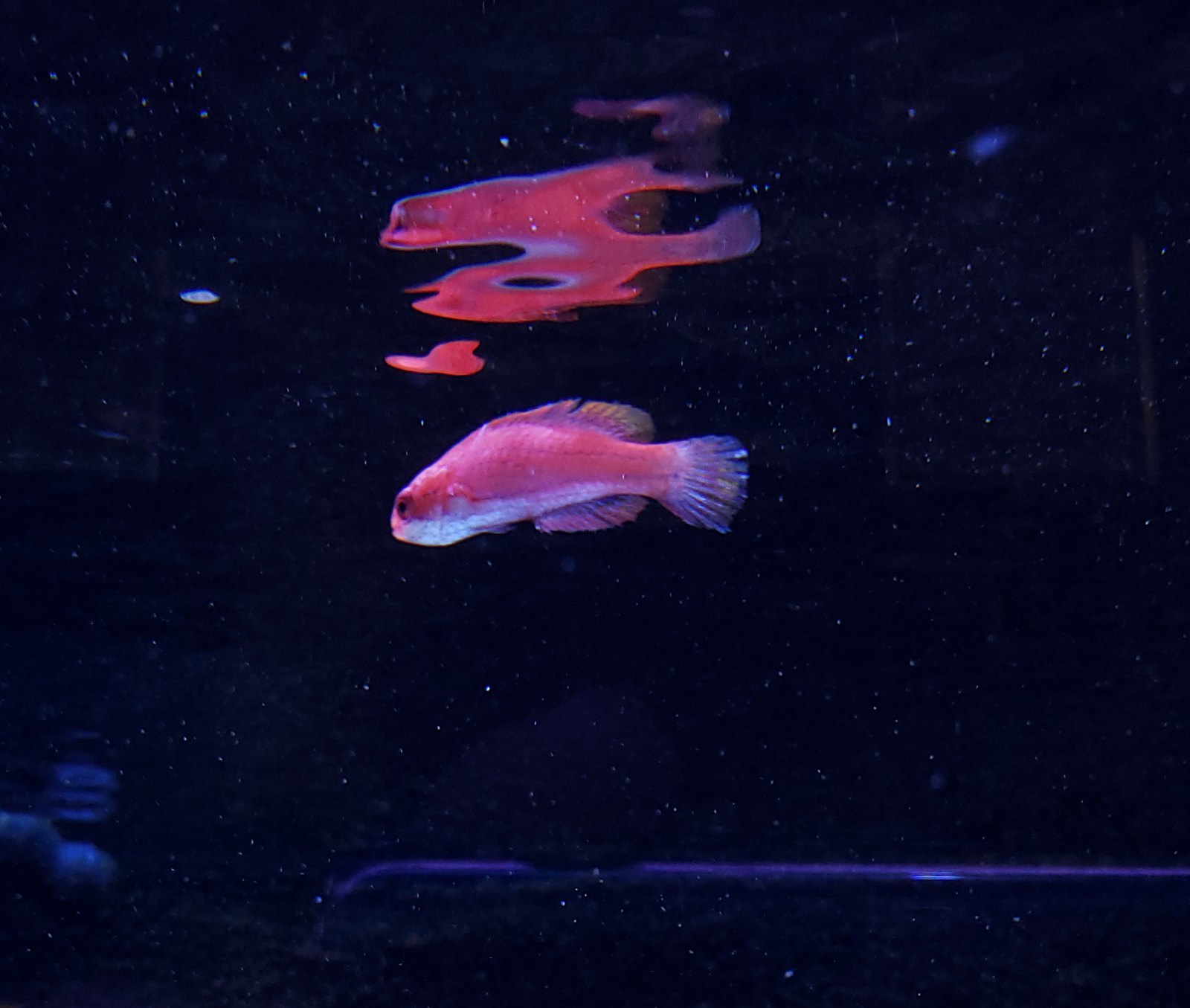
Is this a C. lunatus?


Follow along with the video below to see how to install our site as a web app on your home screen.
Note: This feature may not be available in some browsers.




lunatus or cf. lunatus- would need to see the pattern on the sides to make that determination.Is this a C. lunatus?


No, it's definitely a transitional male, lunatus or cf lunatus is the only question.I will try and get a better picture tomorrow. Minh is a good friend and the person I go to for information. I sent him the picture because originally I thought it was a female pintail. But it continues to get darker
It's the gold bar versus the stripe on the sides, above the black margin. The gold bar is Japanese (lunatus), and the stripe is from the Philippines (cf lunatus). The stripe is also common to isosceles.What is he differences between C. lunatus and C. cf. lunatus? The Lunatus have dark lower body while Cf. Lunatus have body more like Isosceles?
These immage are not mine for sure but from the internet.
Lunatus

Cf. Lunatus

Cf. Lunatus and Isosceles

Is the lower body dark coloration common to both species?It's the gold bar versus the stripe on the sides, above the black margin. The gold bar is Japanese (lunatus), and the stripe is from the Philippines (cf lunatus). The stripe is also common to isosceles.
As terminal males, yes - the amount of black is rather similar between them. lunatus does have a bit more, but it's not a big difference at all.Thanks.
Is the lower body dark coloration common to both species?
Thanks



H. melanurusAny idea? It was called a wingtip at the LFS? Sorry for blues lol




I should add, it does have a single small black dot on the dorsal fin just behind the head. You can just see it in the picture.Close cousin. H. leucoxanthus
Yup, that's correct.Close cousin. H. leucoxanthus

The presence of dorsal filaments and/or transparency of the fins. That's a transitional male and might even be Mccoskeri.So uh, how do you tell a female Carpenter's from a juvenile male?

The presence of dorsal filaments and/or transparency of the fins. That's a transitional male and might even be Mccoskeri.