Navigation
Install the app
How to install the app on iOS
Follow along with the video below to see how to install our site as a web app on your home screen.
Note: This feature may not be available in some browsers.
More options
You are using an out of date browser. It may not display this or other websites correctly.
You should upgrade or use an alternative browser.
You should upgrade or use an alternative browser.
Sexing marine bettas
- Thread starter BirdFish5000
- Start date
- Tagged users None




Nope - but let me know if you find out because I have one I'm curious about!Anyone know how to sex marine bettas?


- Joined
- Sep 2, 2020
- Messages
- 707
- Reaction score
- 787
- Location
- New Hampshire
- What state or country do you live in
- New Hampshire
No real way to tell. Most people just throw two together and prepare themselves to separate if they don't get along.


Apparently there is a way (according to this article: https://www.buildyouraquarium.com/marine-betta/ ) but it’s not easy to do.
To quote the above article:
“Sexing Marine Bettas isn’t exactly straightforward but it’s not impossible, either. The males are always larger compared to females of the same age. And the gonopodium (breeding organ) of the male is pointed when visible while it’s obviously rounder in females. This can be hard to see but one way to make the gonopodium more visible is to give your fish a heavy feed. Their bloated belly may push the gonopodium out slightly.
Males also have a more elongated anal fin compared to females. Since females still have long fins it’s more obvious when comparing examples of both sexes. Lastly, females tend to be constantly plump due to their ovaries while males are noticeably slimmer about the belly.”
———
That said, in a pair/harem, the bettas will change gender as needed so that the biggest/most dominant one becomes the male (like clownfish in reverse).
To quote the above article:
“Sexing Marine Bettas isn’t exactly straightforward but it’s not impossible, either. The males are always larger compared to females of the same age. And the gonopodium (breeding organ) of the male is pointed when visible while it’s obviously rounder in females. This can be hard to see but one way to make the gonopodium more visible is to give your fish a heavy feed. Their bloated belly may push the gonopodium out slightly.
Males also have a more elongated anal fin compared to females. Since females still have long fins it’s more obvious when comparing examples of both sexes. Lastly, females tend to be constantly plump due to their ovaries while males are noticeably slimmer about the belly.”
———
That said, in a pair/harem, the bettas will change gender as needed so that the biggest/most dominant one becomes the male (like clownfish in reverse).

- Joined
- Jul 3, 2016
- Messages
- 6,797
- Reaction score
- 8,685
The marine betta does change sex, just to let you know. There is no 100% visual method of sexing, but you can take an educated guess when mature, over 4 to 4.5". The male is reported to have more dots and and a broader more square head with longer anal fins. In groups the dominant will become male and maybe even in pairs, males have been reported to turn back to female in groups. If you have one it is more difficult to see the differences, but if you have seen many you can take a guess. One with fewer larger dots and a more angular head with shorter anal fins, you could guess female.


I’ve almost always have kept a Betta in one of my tanks since 1973!
I one that I currently have, is probably 7-8 inches in my 500g tank.
I recently received a ‘pair’ of them from a friend that was shutting down his tank…they are both about 5”s.
Anyone think that I might be able to add the 2 small ones in with my bigger one? Hopefully the 2 smaller ones are both female and the bigger one is a male!
I one that I currently have, is probably 7-8 inches in my 500g tank.
I recently received a ‘pair’ of them from a friend that was shutting down his tank…they are both about 5”s.
Anyone think that I might be able to add the 2 small ones in with my bigger one? Hopefully the 2 smaller ones are both female and the bigger one is a male!
- Joined
- Jul 3, 2016
- Messages
- 6,797
- Reaction score
- 8,685
I’ve almost always have kept a Betta in one of my tanks since 1973!
I one that I currently have, is probably 7-8 inches in my 500g tank.
I recently received a ‘pair’ of them from a friend that was shutting down his tank…they are both about 5”s.
Anyone think that I might be able to add the 2 small ones in with my bigger one? Hopefully the 2 smaller ones are both female and the bigger one is a male!
In that size tank I don't think you will have a problem. With 3 it will be interesting to see the dynamics, keep us posted.

No, Marine Bettas do not change sex.The marine betta does change sex, just to let you know. There is no 100% visual method of sexing, but you can take an educated guess when mature, over 4 to 4.5". The male is reported to have more dots and and a broader more square head with longer anal fins. In groups the dominant will become male and maybe even in pairs, males have been reported to turn back to female in groups. If you have one it is more difficult to see the differences, but if you have seen many you can take a guess. One with fewer larger dots and a more angular head with shorter anal fins, you could guess female.

Apparently there is a way (according to this article: https://www.buildyouraquarium.com/marine-betta/ ) but it’s not easy to do.
To quote the above article:
“Sexing Marine Bettas isn’t exactly straightforward but it’s not impossible, either. The males are always larger compared to females of the same age. And the gonopodium (breeding organ) of the male is pointed when visible while it’s obviously rounder in females. This can be hard to see but one way to make the gonopodium more visible is to give your fish a heavy feed. Their bloated belly may push the gonopodium out slightly.
Males also have a more elongated anal fin compared to females. Since females still have long fins it’s more obvious when comparing examples of both sexes. Lastly, females tend to be constantly plump due to their ovaries while males are noticeably slimmer about the belly.”
———
That said, in a pair/harem, the bettas will change gender as needed so that the biggest/most dominant one becomes the male (like clownfish in reverse).
1. I have not found any indication that Marine Bettas change sex, and I have a lot of them. From all I can tell, they are either male or female from the moment they hatch or settle.
2. Males can be smaller than females. With one of my pairs, the female started out significantly larger than the male, though he has caught up by now.
Correct:
gonopodium: males have a pointy one, females a more rounded.
belly: females usually have a fuller belly. However, this is usually not a reliable indicator, especially not with fish in a store system.
More here: https://www.reef2reef.com/threads/marine-betta.716039/
Thank you for chiming in!1. I have not found any indication that Marine Bettas change sex, and I have a lot of them. From all I can tell, they are either male or female from the moment they hatch or settle.
2. Males can be smaller than females. With one of my pairs, the female started out significantly larger than the male, though he has caught up by now.
Correct:
gonopodium: males have a pointy one, females a more rounded.
belly: females usually have a fuller belly. However, this is usually not a reliable indicator, especially not with fish in a store system.
More here: https://www.reef2reef.com/threads/marine-betta.716039/
I’ll defer to your experience there, as looking at it again with a quick search I’m seeing some sites saying they change sex, some saying they don’t, some saying they might be able to, etc.
Finding your post on humblefish from November 2021 (quoted below), would you consider the non-dominant males indistinguishable from the females? I know initial phase male wrasse disguise themselves as females (both in coloration and in behavior until spawning occurs), would you say that it’s similar with marine bettas?
The humblefish post:
“One catch with them is that they likely do not change sex. Like with Grammas, it seems non-dominant males disguise themselves as females to avoid aggression from the dominant male. I suspect my trio to be composed of two males and one female as the dominant male only engages with the later added female in mating behavior but almost completely ignores the second Betta he had been with for years.”
I had a "pair" of two males. They got along well enough but, of course, never spawned. I see a similar pattern with my larger juveniles. While 10 or more get along in tanks as small as 20 gallon, here is some hacking order and some have bite marks at times. But they get along surprisingly well. I assume, most fights are among males over territorial dominance. Males are also less tolerant of added juveniles than females. I picked the ones I retained by size, hopefully, I didn't unintentionally select primarily males. I would need more females than males.Thank you for chiming in!
I’ll defer to your experience there, as looking at it again with a quick search I’m seeing some sites saying they change sex, some saying they don’t, some saying they might be able to, etc.
Finding your post on humblefish from November 2021 (quoted below), would you consider the non-dominant males indistinguishable from the females? I know initial phase male wrasse disguise themselves as females (both in coloration and in behavior until spawning occurs), would you say that it’s similar with marine bettas?
The humblefish post:
“One catch with them is that they likely do not change sex. Like with Grammas, it seems non-dominant males disguise themselves as females to avoid aggression from the dominant male. I suspect my trio to be composed of two males and one female as the dominant male only engages with the later added female in mating behavior but almost completely ignores the second Betta he had been with for years.”

- Joined
- Jul 3, 2016
- Messages
- 6,797
- Reaction score
- 8,685
No, Marine Bettas do not change sex.
It appears you and I disagree with many things in regard of the marine betta. Esch can easily research on their own and decide what source they find to be credible.
I think we xan agree you xan not definitely visually sex them, so have you ever 100% verified tge sex. I have many times with lions by identifying the ovaries or gonads after death. I'm pretty good at guessing at this point.
Last edited:

Jay Hemdal
10K Club member
View Badges
Staff member
Forum Moderator
Excellence Award
Expert Contributor
Article Contributor
Fish Medic
1. I have not found any indication that Marine Bettas change sex, and I have a lot of them. From all I can tell, they are either male or female from the moment they hatch or settle.
2. Males can be smaller than females. With one of my pairs, the female started out significantly larger than the male, though he has caught up by now.
Correct:
gonopodium: males have a pointy one, females a more rounded.
belly: females usually have a fuller belly. However, this is usually not a reliable indicator, especially not with fish in a store system.
More here: https://www.reef2reef.com/threads/marine-betta.716039/
When you say "gonopodium" do you mean "genital papilla"? I always thought that gonopodiums are only present in certain male livebearers, where they serve as an intermittent organ to transfer sperm. Genital papilla are present in some egglayers (like tilapia and FW angels) and the size/shape of these can sometimes be used to tell male from female.
Jay
I just used the term he was using before. "genital papilla" would be the correct term.When you say "gonopodium" do you mean "genital papilla"? I always thought that gonopodiums are only present in certain male livebearers, where they serve as an intermittent organ to transfer sperm. Genital papilla are present in some egglayers (like tilapia and FW angels) and the size/shape of these can sometimes be used to tell male from female.
Jay

When you say "gonopodium" do you mean "genital papilla"? I always thought that gonopodiums are only present in certain male livebearers, where they serve as an intermittent organ to transfer sperm. Genital papilla are present in some egglayers (like tilapia and FW angels) and the size/shape of these can sometimes be used to tell male from female.
Jay
Good to know - I appreciate the correction there. I'm not very savvy with fish anatomy and technical terminology just yet, so I just quoted the article I linked to above.I just used the term he was using before. "genital papilla" would be the correct term.
It appears you and I disagree with many things in regard of the marine betta. Esch can easily research on their own and decide what source they find to be credible.
A successful breeder seems to be pretty dang credible /shrug
Much of the information you find on the internet about Marine Bettas is inaccurate. Most of that false information can be traced back to a few original sources of very questionable reliability. Said sources usually also state that Marine Bettas are groupers, something that couldn't be further from the truth.It appears you and I disagree with many things in regard of the marine betta. Esch can easily research on their own and decide what source they find to be credible.
I think we xan agree you xan not definitely visually sex them, so have you ever 100% verified tge sex. I have many times with ny lions by identifying the ovaries or gonads after death. I'm pretty good at guessing at this point.
I have had many Marine Betta pairs over the last three decades and bred quite a few. In all this time, with hundreds of individuals kept or bred, I did not see any indication of sex change in this species but rather the opposite:
- In one case, one of my captive-bred juveniles that I added to a larger female grew up to be a male and spawned with that female.
- I paired a larger and a smaller wild juvenile and the smaller turned out to be a male.
- I paired 2 juveniles and both turned out to be males.
The Plesiopidae are closely related to the Opistognathidae, which are decidedly gonochoric (do not change sex), and Gramma, who also have been found to be gonochoric.

That article is full of errors and blatantly false information:

Back in Germany, I tried to feed the Marine Bettas I had there small, previously frozen gobies I had caught as bycatch when collecting grass shrimp, but they wouldn't take them, not even if shoved right in their faces. A grass shrimp offered right after this was eagerly taken. The fish who actually gulped down the gobies with gusto were my A. ocellaris, A. percula, and A. chrysargyrus (Philippine "clarkii").
The Marine Bettas also don't go indiscriminately after shrimp. Cleaner shrimp are not touched. From what I see, Marine Bettas feed primarily on copepods, amphipods, and small Mysids that they pick like mandarins.
I thought for a while that they may change sex from female to male but ultimately came to the conclusion that they don't. And most certainly not from male to female.
Until there is sufficient scientific evidence for hermaphroditism in these fish, I'd say, based on my observations, they don't change sex.
That article seems to be put together from various sources (including my breeding thread here) without sufficient first-hand knowledge, which is unfortunately quite common in this hobby.
Plesiopidae and the Grammatidae are members of the Ovalentaria. The Serranidae (Groupers, Seebasses, Anthia) are on a completely different main branch....Calloplesiops altivelis, a member of the family Plesiopidae. These fish are closely related to Groupers/Basslets (Serranidae) and Fairy Basslets (Grammatidae).
I have yet to find a Calloplesiops who willingly feeds on fish, and I have my large ones with plenty of bite-sized smaller fish - Assessors, Dartfish, Dottybacks, Gobies, baby Clownfish,... - the Marine Bettas don't even look at them.They then sneak up on and trap small fish and shrimp in and around coral rubble. ...
Back in Germany, I tried to feed the Marine Bettas I had there small, previously frozen gobies I had caught as bycatch when collecting grass shrimp, but they wouldn't take them, not even if shoved right in their faces. A grass shrimp offered right after this was eagerly taken. The fish who actually gulped down the gobies with gusto were my A. ocellaris, A. percula, and A. chrysargyrus (Philippine "clarkii").
The Marine Bettas also don't go indiscriminately after shrimp. Cleaner shrimp are not touched. From what I see, Marine Bettas feed primarily on copepods, amphipods, and small Mysids that they pick like mandarins.
They can get Cryptocaryon and Amyloodinium just fine. Plenty of other ailments as well.... There are plenty of cases of entire tanks coming down with Marine Ich (Cryptocaryon irritans) – except for the Marine Betta. They may have a genetic resistance or antiparasitic agent in their slime coat. ...
Nope!Marine Bettas, like many saltwater fish, are capable of changing sex as the environment and social structure demands (the proper term is sequential hermaphroditism). If you decide to buy four Marine Bettas and three end up being males, the largest and most dominant fish will remain a male. The others will gradually change sex over time and become females!
I thought for a while that they may change sex from female to male but ultimately came to the conclusion that they don't. And most certainly not from male to female.
Until there is sufficient scientific evidence for hermaphroditism in these fish, I'd say, based on my observations, they don't change sex.
That article seems to be put together from various sources (including my breeding thread here) without sufficient first-hand knowledge, which is unfortunately quite common in this hobby.
Well, I'm glad you're here to share your knowledge about this beautiful fish, as it seems (looking at a number of different articles - linked below - from a number of different sites that all agree with most of the first article I linked above) that there is a lot of information needing clarified about this particular species!That article is full of errors and blatantly false information:
Plesiopidae and the Grammatidae are members of the Ovalentaria. The Serranidae (Groupers, Seebasses, Anthia) are on a completely different main branch.
I have yet to find a Calloplesiops who willingly feeds on fish, and I have my large ones with plenty of bite-sized smaller fish - Assessors, Dartfish, Dottybacks, Gobies, baby Clownfish,... - the Marine Bettas don't even look at them.
Back in Germany, I tried to feed the Marine Bettas I had there small, previously frozen gobies I had caught as bycatch when collecting grass shrimp, but they wouldn't take them, not even if shoved right in their faces. A grass shrimp offered right after this was eagerly taken. The fish who actually gulped down the gobies with gusto were my A. ocellaris, A. percula, and A. chrysargyrus (Philippine "clarkii").
The Marine Bettas also don't go indiscriminately after shrimp. Cleaner shrimp are not touched. From what I see, Marine Bettas feed primarily on copepods, amphipods, and small Mysids that they pick like mandarins.
They can get Cryptocaryon and Amyloodinium just fine. Plenty of other ailments as well.
Nope!
I thought for a while that they may change sex from female to male but ultimately came to the conclusion that they don't. And most certainly not from male to female.
Until there is sufficient scientific evidence for hermaphroditism in these fish, I'd say, based on my observations, they don't change sex.
That article seems to be put together from various sources (including my breeding thread here) without sufficient first-hand knowledge, which is unfortunately quite common in this hobby.
I do have to say, though, seeing as how the only two ways for people to learn proper fish care is either from first-hand experience or by researching/learning from someone with that first-hand experience, I can't fault people for sharing what is presented to them as first-hand experience in an attempt to help others (even if that information is not entirely accurate). As someone who is still waiting to get a tank of their own up and running, this is why I greatly appreciate those who do have that actual first-hand information sharing it clearly and concisely with the community (as I hope to be able to in the future).
Just to clarify because I know it can be hard to read emotion/context in text, I genuinely do appreciate you and others sharing your firsthand knowledge, and it is sad to see so much inaccurate information being passed around about this fish (thankfully, from what I've seen, the hobby's knowledge is generally better about most fish than it seems to be about this one). I never intend to share inaccurate information, so I always appreciate being corrected.
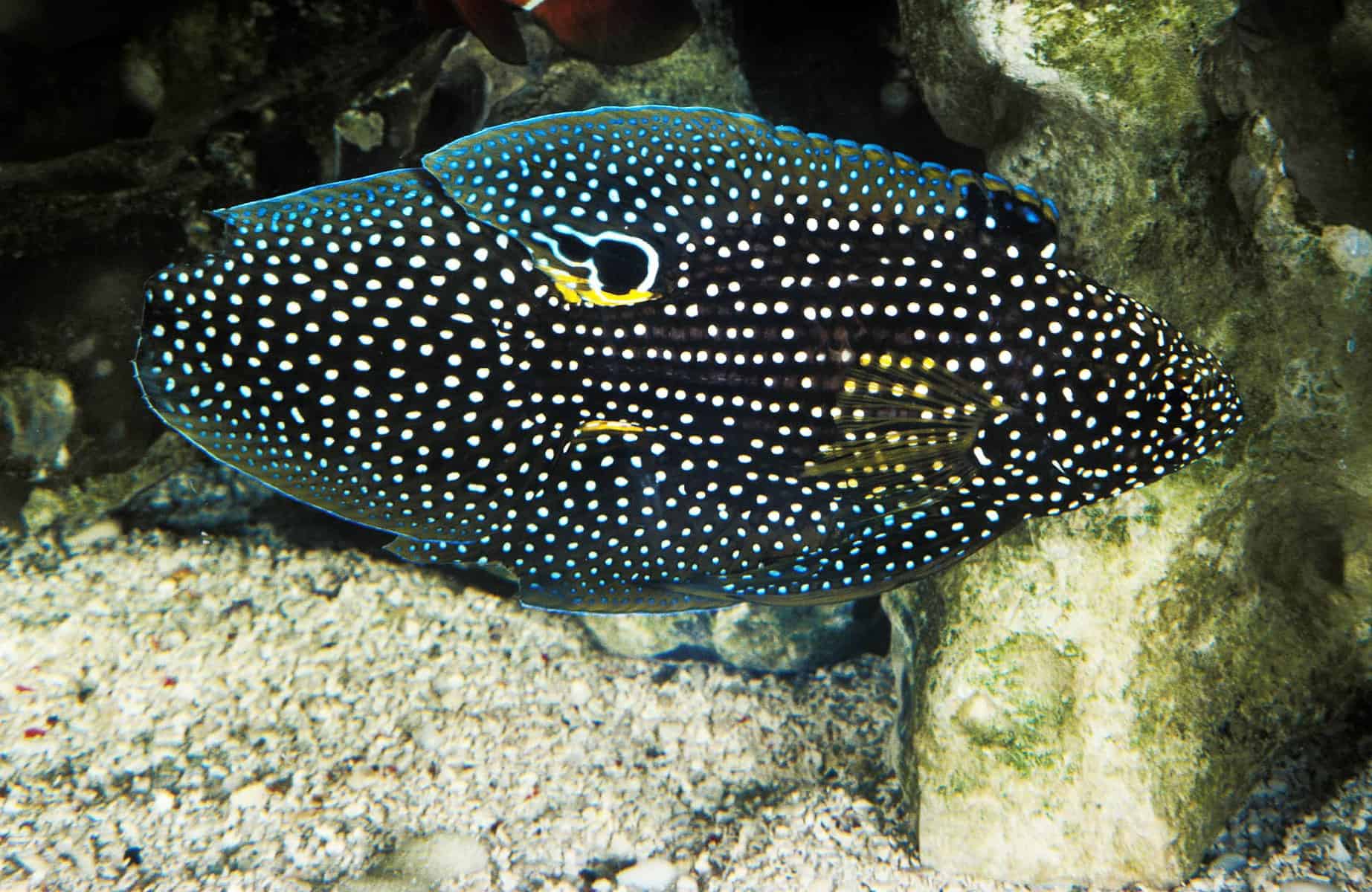
A Deep Dive into the Marine Betta: Can They Thrive in Your Reef?
Although it’s called a Marine betta, this is a saltwater fish species and not a freshwater creature at all. In fact, the Marine betta is not related to the Siamese Fighting fish! So, what is
 bettasource.com

Marine Betta Care - Calloplesiops altivelis
Marine Betta (Calloplesiops altivelis), aka Comet, fish profile and care information such as tank size, tank mates, life span, diet, foods, breeding, behavior, tank setup and temperament.
UR Article - Marine Betta
www.ultimatereef.net