
Navigation
Install the app
How to install the app on iOS
Follow along with the video below to see how to install our site as a web app on your home screen.
Note: This feature may not be available in some browsers.
More options
You are using an out of date browser. It may not display this or other websites correctly.
You should upgrade or use an alternative browser.
You should upgrade or use an alternative browser.
Bailed on Bare Bottom
- Thread starter Ocean Lotion
- Start date
- Tagged users None


- Joined
- Jan 6, 2017
- Messages
- 2,325
- Reaction score
- 2,293
Sand bed if maintained well it can be part of the biological filtration. If not maintained well, if there is more input(nutrient) than output(biological can handle). No3 po4 will creep up.
- Joined
- Jan 6, 2017
- Messages
- 2,325
- Reaction score
- 2,293
Ha ha love itYou challenged the wrong guy. Jda knows his stuff for sure.




Most of that is rust and brown coralline algae. It is of no consequence since a conch or cucumber will be along soon to clean it up. The urchins on the rocks eat it first since it is softer than purple. Are you saying that coralline will not grow in a bare bottom tank?
Actually, never mind, I don't want to change the narrative. The idea to help the OP with his nitrate issue is my emphasis, and showing how sand beds do not release more nitrate appears over.
Actually, never mind, I don't want to change the narrative. The idea to help the OP with his nitrate issue is my emphasis, and showing how sand beds do not release more nitrate appears over.
- Joined
- Jan 6, 2017
- Messages
- 2,325
- Reaction score
- 2,293
Honestly even I make so many mistakes. It took me years to learn and there is still more I need to learn. All what am saying is that there are many ways to run successful system. What matter is fundamentals which many many reefers overlook.
Husbandry, right filtration planning, rock solid parameters, adequate light and circulation.
Everybreefer will tell u this is important, but the difinitionnof each one of these will wildly vary between users..
Am an engineer and data driven reefer, unless I can understand the science behind things I cannot just accept blanket statements.
Cheers


I agree, The input must balance with the export. The OP has no export except the livestock. The HOB is not doing anything cept taken up space. A tank can be run like that as long as your frugal on the input side.
- Joined
- Jan 6, 2017
- Messages
- 2,325
- Reaction score
- 2,293
Spot on. The idea here to help this user.Most of that is rust and brown coralline algae. It is of no consequence since a conch or cucumber will be along soon to clean it up. The urchins on the rocks eat it first since it is softer than purple. Are you saying that coralline will not grow in a bare bottom tank?
Actually, never mind, I don't want to change the narrative. The idea to help the OP with his nitrate issue is my emphasis, and showing how sand beds do not release more nitrate appears over.
The right thing is to have him/her is to find why there is high nitrate.

Can you show us your system so we judge how experienced you are..
Here is mine
Nice tank! You should make a build thread! What size is that?

- Joined
- Jan 6, 2017
- Messages
- 2,325
- Reaction score
- 2,293
Can you post your system details and feeding habits. so we see if we can help you.After 7 months of bare bottom I had to add sand back in. Even with weekly 25% h2o changes my nit rate stays between 25 and 50. My beautiful monti caps are slowly dieing. I do not have a sump at this time and if I was running chaeto it probably would be fine. I may try again when I am running a sump.
- Joined
- Jan 6, 2017
- Messages
- 2,325
- Reaction score
- 2,293
Btw adding sand to an established tank should be done carefully and slowly.
Also the sand should be rinsed and soaked with rodi water until there is no po4 in the soaking water.
Then add 25% of the intended sand ammount week such that you add all the sand you want over a month.
Finally do not let anyone convince you to do deep sand bed. DSB is horrible no4 factory even if you clean it. This is due to a specific strain of bacteria that develop in DSB.
1 to 2" of sand bed is good to aim for.
I will state again, you seems to have enough live rocks and I guarantee you the no3 is not due to lack of sand...so we better find the root cause of your no3.
Also the sand should be rinsed and soaked with rodi water until there is no po4 in the soaking water.
Then add 25% of the intended sand ammount week such that you add all the sand you want over a month.
Finally do not let anyone convince you to do deep sand bed. DSB is horrible no4 factory even if you clean it. This is due to a specific strain of bacteria that develop in DSB.
1 to 2" of sand bed is good to aim for.
I will state again, you seems to have enough live rocks and I guarantee you the no3 is not due to lack of sand...so we better find the root cause of your no3.

For somebody who is an engineer and a data driven reefer, you sure do like some blanket statements without any science to back them up. Not even a DSB is a nitrate factory - again, it is impossible since they cannot produce any ammonia. None. They cannot produce any phosphate either (if this is what you meant by no4). The sand can get full of phosphate, quit binding more and the phosphate levels can rise after many years, but this is not because the sand is a "factory" it is because it is incapable of masking the reefer's incompetence any longer. There are a lot of good reasons not to use any sand, but "time bombs" and "factories for anything" are not some of them. It amazes me how people screw this up when there is decades of actual science, studies and real PHDs who have written about this literally since the 1970s.
I have no idea where all sand comes from, but the stuff from the Caribbean was tested and has about .000018 ppb of phosphate when used 1 pound per gallon. This is hardly an issue. The ocean is very low in phosphate and the sand comes in clean. It is possible that sand from a beach, crushed up terrestrial rock or sand from a terrestrial area can be full of phosphate, but anything taken from the ocean for a reef tank has traditionally been very much phosphate free.
I have no idea where all sand comes from, but the stuff from the Caribbean was tested and has about .000018 ppb of phosphate when used 1 pound per gallon. This is hardly an issue. The ocean is very low in phosphate and the sand comes in clean. It is possible that sand from a beach, crushed up terrestrial rock or sand from a terrestrial area can be full of phosphate, but anything taken from the ocean for a reef tank has traditionally been very much phosphate free.
- Joined
- Jan 6, 2017
- Messages
- 2,325
- Reaction score
- 2,293
Yo yo, you are getting defensive, for some reason making it personal and seem to just debate for the sake of it.For somebody who is an engineer and a data driven reefer, you sure do like some blanket statements without any science to back them up. Not even a DSB is a nitrate factory - again, it is impossible since they cannot produce any ammonia. None. They cannot produce any phosphate either (if this is what you meant by no4). The sand can get full of phosphate, quit binding more and the phosphate levels can rise after many years, but this is not because the sand is a "factory" it is because it is incapable of masking the reefer's incompetence any longer. There are a lot of good reasons not to use any sand, but "time bombs" and "factories for anything" are not some of them. It amazes me how people screw this up when there is decades of actual science, studies and real PHDs who have written about this literally since the 1970s.
I have no idea where all sand comes from, but the stuff from the Caribbean was tested and has about .000018 ppb of phosphate when used 1 pound per gallon. This is hardly an issue. The ocean is very low in phosphate and the sand comes in clean. It is possible that sand from a beach, crushed up terrestrial rock or sand from a terrestrial area can be full of phosphate, but anything taken from the ocean for a reef tank has traditionally been very much phosphate free.
I am not intersted in this neither do I care what you think. So am out.
Good luck bud.
Last edited:
I am not debating. Facts are facts and science is science. If I am persistent, it is only because I don't want these falsehoods to further fester.
There is a day worth of reading with all of the FAQ if anybody really wants to know about sand beds.
http://www.wetwebmedia.com/deepsandbeds.htm
Here is a quick snippet:
There is a day worth of reading with all of the FAQ if anybody really wants to know about sand beds.
http://www.wetwebmedia.com/deepsandbeds.htm
Here is a quick snippet:
One of the principal benefits to deep sand bed methodologies is the potential for natural nitrate reduction (NNR). The speed and extent to which a DSB can reduce nitrate in an aquarium amazes many aquarists… especially those that have struggled with nitrate control for any length of time through other means. The benefits to an established tank with the upgrade to a DSB are apparent in just a few weeks with potential for complete nitrate reduction (to "zero")!


- Joined
- Apr 26, 2018
- Messages
- 31
- Reaction score
- 35
If you're going to use Sand to help with filtration, you need a 3 inch or deeper sand bed made up of a variety of sand sizes....so water can percolate through it. Don't use the smallest grain Oolite by itself, mix in some of the medium grain sand too.
If you use a shorter/smaller sand bed, Bob Fenner from WETWEBMEDIA.com and Sally Jo Headlee from GARF.org would say, you are just creating a sewer. It has to be deep enough for the Anaerobic bacteria to thrive/survive. And you can't go around disturbing it all the time, you have to leave it in its stable state. If you stir it up weekly it just releases nitrates into the water,....you create a nitrate spike. So, you have to let it do it's thing,....hope I didn't scare too many people by saying this! If you go search WetWebMedia.com you can look this topic up and get the experts advice.
If you use a shorter/smaller sand bed, Bob Fenner from WETWEBMEDIA.com and Sally Jo Headlee from GARF.org would say, you are just creating a sewer. It has to be deep enough for the Anaerobic bacteria to thrive/survive. And you can't go around disturbing it all the time, you have to leave it in its stable state. If you stir it up weekly it just releases nitrates into the water,....you create a nitrate spike. So, you have to let it do it's thing,....hope I didn't scare too many people by saying this!
If you go search WetWebMedia.com you can look this topic up and get the experts advice.
- Joined
- Apr 26, 2018
- Messages
- 31
- Reaction score
- 35
It isn't a nitrate factory per se,....but if you stir it up by cleaning your sandbed every time it looks less than pristine, you will cause the detritus to enter the water stream and cause a nitrate spike. Let it breath!If we are measuring Johnsons, here is 1/4 of mine. Acropora and clams only. You should not need this... there are decades of sand studies and articles out there that say the same thing. Only message board posters and people wanting to sell you a product think that a sand bed is a "nitrate factory."
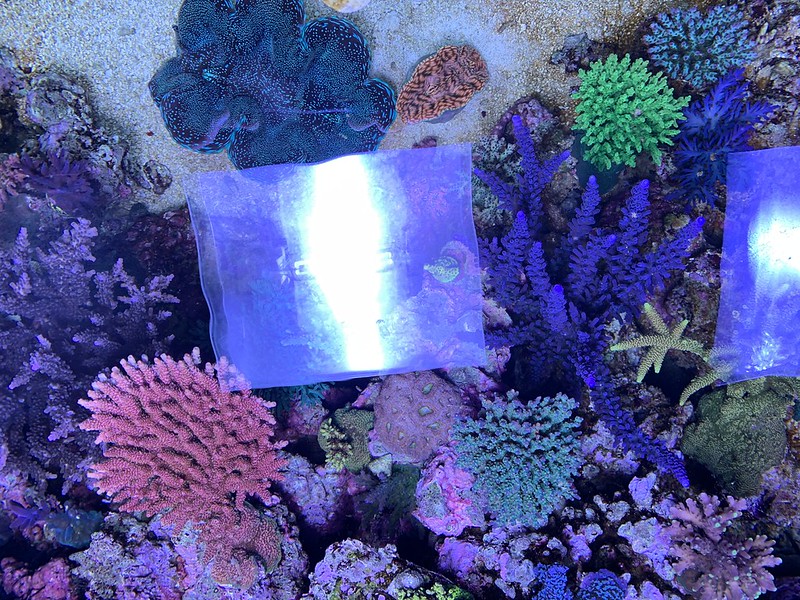
Detritus is nearly benign once it even touches the top of the sand, but is quickly rendered completely benign by the microfauna and bacteria in the surface layers. They were wrong about this in the early days and has since changed with more studies that have come out. The issue with stirring up the sand is that you flip flop the oxic and anoix areas and also can bury creatures that live in the oxic zone and expose creatures that live in the anoxic causing die off. The detritus stir up is unfortunate and messy, but it has nothing organic to contribute to creating nitrate. The ecosystem disturbance is the issue - both the die off and the lower processing ability. Let's assume that you did disturb the ecosystem and it was no longer functioning at 100%... "normal" nitrate would not be able to be processed and would rise, right? This happens to many people, but the sand bed did not "release" any nitrate, it just was unable to do the job that it was once doing. The oxic and anoxic areas repopulate and this usually sorts it's self out, but it takes some time.
The people who use shallow sand beds keep the stirred up so that the anoix areas can never develop. This does not cause any issues since no ecosystem was disturbed.
The idea of detritus releasing nitrates is one of the things that dates the WWM FAQ a bit... yes, the nitrates will creep up, but not from the detritus, as explained above. Also, you will read them mention that nitrate (or phosphate) will go to "zero" - this is not completely true as we are able to measure today. You have to remember that when WWM was in the prime, test kits were horrible and most test kits showed nitrate under 2 as zero - or "clear." What they mean when they say "zero" is that they are undetectable on a test kit. Most nitrate test kits are no better today, but we do have better phosphate test kits and also IC.
Even with all of these issue, WWM is still THE BEST resource for reefing knowledge that is out there. It is free of advertiser self-serving "studies," fanboydom or any kind of bias. These were just guys who knew their stuff and wanted to help. Also, if they ever found out that they were not correct, they were not too proud to correct themselves.
**Tangent, a bit... people did start to realize that detritus would "gum up the works" and not allow good areas of fauna and bacterial development when the benign detritus built up too much. This led to folks starting to vacuum some of their sand after 4-5 years. They went slow, like 15-20% every six months. You sometimes even have to add new sand as the lower pH in the sandbed can melt some. Not everybody did this, but it did not hurt anything as long as not too much was done at once. I vacuum about 25% of my sand a year now that my tanks are quite old. It is fun to see the conchs, cucumbers and worms flock to the freshly vacuumed area to see what I disturbed that are now able to reach.
The people who use shallow sand beds keep the stirred up so that the anoix areas can never develop. This does not cause any issues since no ecosystem was disturbed.
The idea of detritus releasing nitrates is one of the things that dates the WWM FAQ a bit... yes, the nitrates will creep up, but not from the detritus, as explained above. Also, you will read them mention that nitrate (or phosphate) will go to "zero" - this is not completely true as we are able to measure today. You have to remember that when WWM was in the prime, test kits were horrible and most test kits showed nitrate under 2 as zero - or "clear." What they mean when they say "zero" is that they are undetectable on a test kit. Most nitrate test kits are no better today, but we do have better phosphate test kits and also IC.
Even with all of these issue, WWM is still THE BEST resource for reefing knowledge that is out there. It is free of advertiser self-serving "studies," fanboydom or any kind of bias. These were just guys who knew their stuff and wanted to help. Also, if they ever found out that they were not correct, they were not too proud to correct themselves.
**Tangent, a bit... people did start to realize that detritus would "gum up the works" and not allow good areas of fauna and bacterial development when the benign detritus built up too much. This led to folks starting to vacuum some of their sand after 4-5 years. They went slow, like 15-20% every six months. You sometimes even have to add new sand as the lower pH in the sandbed can melt some. Not everybody did this, but it did not hurt anything as long as not too much was done at once. I vacuum about 25% of my sand a year now that my tanks are quite old. It is fun to see the conchs, cucumbers and worms flock to the freshly vacuumed area to see what I disturbed that are now able to reach.

I had someone else get bent out of shape when I used the word factory. By definition our glass boxes are nitrate factories. but a deep sand bed can be a Nitrogen gas factory that is processing nitrate and releasing it back into the atmosphere. But most people don’t manage their beds correctly or don’t go deep enough thereby creating a nutrient sink. For me it’s just easier to manage other ways
Factory:
A: a building or set of buildings with facilities for manufacturing
b: the seat of some kind of production
Factory:
A: a building or set of buildings with facilities for manufacturing
b: the seat of some kind of production
OP
OP

Fun to read all the responce. Things I have experienced - I always ran a 1 1/2" sand bed and never had nitrates. I did run into po4 problems abd it took over a year to purge the po4 out of my sand and rock and that only took the amount of absorbed po4 down to a level just low enough not to raise the level in my tank. The sand and rock spent over 10 years to get to that point but created a HA Problem that I fought for 3 years till we found fluconazole. The reason I tried bb was to eliminate one of the po4 storage spots in my tank. So eliminate one issue and start another.  I wish I had thought to just rotate a portion of my sand occasionally which is what I intend to do. The other issue is that we do get a septic tank effect even with good husbandry. The 75 I had al that time I periodically cleaned with my super duece filter (750 gph little giant pump with large canister filter I used when I had an aquarium mainanence business) and ran till the sand bed was clean. When I tore that tank down I was amazed the digesting foul smell from the tank when I pulled out the rock work. I also gravel vac ed the sand regularily. I had hoped to not have sand for that reason but without a sump for macro algae to remove the nitrate I am loosing the nitrate battle. Watching what happens to no3 with the addition of sand will be inter3sting. I will repost in a month or when ever my no3 does or does not reduce. I feed my corals and fish 2 times a day what they can consume in about 3 mins.
I wish I had thought to just rotate a portion of my sand occasionally which is what I intend to do. The other issue is that we do get a septic tank effect even with good husbandry. The 75 I had al that time I periodically cleaned with my super duece filter (750 gph little giant pump with large canister filter I used when I had an aquarium mainanence business) and ran till the sand bed was clean. When I tore that tank down I was amazed the digesting foul smell from the tank when I pulled out the rock work. I also gravel vac ed the sand regularily. I had hoped to not have sand for that reason but without a sump for macro algae to remove the nitrate I am loosing the nitrate battle. Watching what happens to no3 with the addition of sand will be inter3sting. I will repost in a month or when ever my no3 does or does not reduce. I feed my corals and fish 2 times a day what they can consume in about 3 mins.











