Years back when they first came out I ran 3x gen1 rations with tir's over my 180 and had zero issues growing sps. They were 8" above water level and grew sps on the sand bed.
+1
I think this "shading" issue gets a lot of owners tho.... And most of the available information doesn't help.
The problem that is being pointed out on one hand is one of coverage - darkness in between the lights.
The capability that is being pointed out on the other hand, is that these lights have good intensity.
The coverage issue is really only aesthetic problem as some people have pointed out. You will not have problems finding corals to live in those shadier zones.... Most corals are not that particular.... Instead they are very adaptable.
At the same time (depending on your exact goals and circumstances) you really don't
need the intensity of the xr30s even for a 180.
I personally like the XR15's (only 30% less PAR) for the OP's tank and I would use 3-5 of them.
Consider this:
- 2200 PAR total from the two xr30 pro's ($1500)
- 2400 PAR total from three xr15 pro's ($1200)
- 3200 PAR total from four xr15 pro's ($1600)
"Spread" is dictated by the layout of your emitters more than the type of lenses that you have, so I like both of the XR15 options better than the XR30 config and I think you will have better light spread, better performance and be able to run your lights at lower power.
Five fixtures would be even better if you want to go that far.
Whatever combination you end up with, make sure you use a light meter to set the intensity. Do not go without a light meter just because a par meter is too expensive...
A free [HASHTAG]#lux[/HASHTAG] [HASHTAG]#meter[/HASHTAG] app for your phone is a great place to start and will be perfectly serviceable. A $15 handheld lux meter is better, but requires you to wait for shipping.

Either one will let you start getting practice with - and good use from - a light meter before deciding you have to lay out $400 on a PAR meter.
That will also give you time to read all of Dana Riddle's articles about lux meters and PAR meters.













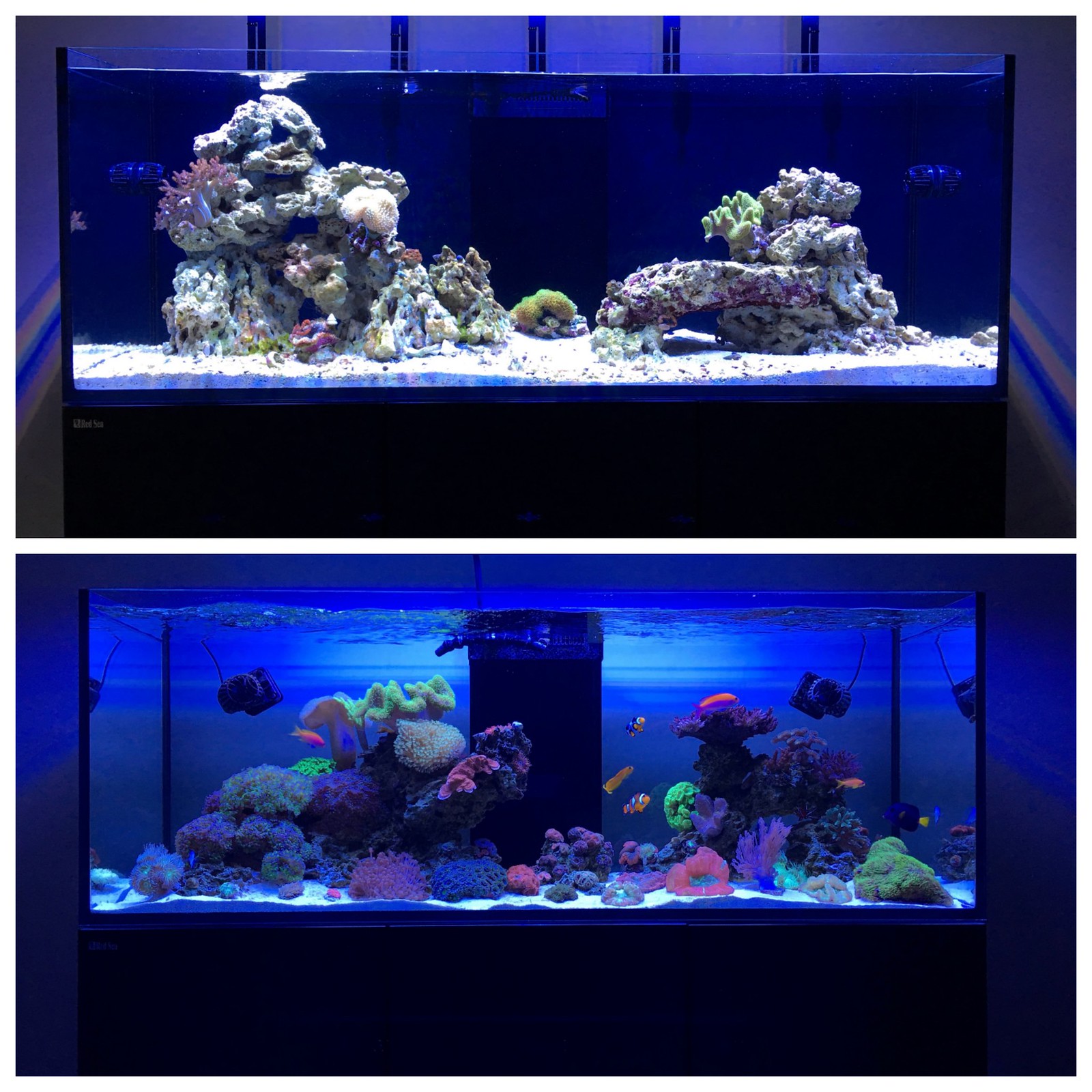 Red Sea Reefer 10 Months