I'm sorry guys, it was not my intention for teasing anyobdy. I was pretty excited to finally tell others what worked for me. I'm not getting paid to advertise any of this nor wanting any credits. I just wanted to showed what I did to win the fight. Again It was bad timing on my end, it was Father day weekend and we had visitor from out of town. If any of you guys have a boss lady then you would understand that, I can't just be on the phone and type a 2 page step by step. I will admit that I should have done it at first then post the topic. I didn't realize there was that many people involved in this thread.
So here it is again:
Tony’s I-O Method
As I first mention this only occurred to me with this current reef tank. I never had this issue in my past with 10+ years in reefing and many reef tanks build. I done plenty of reading and asking Dr.Google for advice all the tips and tricks. After wasting so much of my hard earn money clean up crew like: Zebra turbo and Mexican turbo, Crab you name it I got it. I’m tired of investing hundred of dollars on stuff that doesn't work. They have a very small percentage of eating your GHA. I gotten lawnmower blenny, and was hoping he will handle up. ( All he does is hang out on the grass)
I finally stopped reading and taking advice from people that thinks or have a idea of how to get rid of it. Every tank is different and depends on what you have going on. I don't have a science or Marine Biology degree, I’m just a hobbyist that is tired of my GHA taking over and suffocating my SPS corals. So please don't judge my understanding!. All my intention is to show other how and what I did to get rid of my massive GHA issue.My tank have been clean and clear and under control.
Step number one, is you need to write down all the BIOLoad you have that can affect or feed the GHA:
For Example:
2x Ai running 8 hours
1x Radion Running 8 Hours
2x Auto Feeder 2x feed a day with xxxx amount
ATO water PPM
Fish:
Corals:
ETC...
Step number two, you need to see what mechanical filter or Biological filter you have going on:
For Example:
100lb Live sand
200LB rocks
Skimmer (Dry or Wet Skim)
Reactor: GFO
Reactor: Carbon
Reactor: Biopellet
UV Light:
Filter Shocks
Etc….
Step three, is once you look at your chart of comparison and make notes to see a good picture of your intake and outtake. This is one of the key point your intake should not be more than your outtake. If you feel like your intake/feeding or leakage is higher than the out take you need to balance it out. Just like a diet you can’t eat more than your body can used.. One way I was testing to see if my adjustment have been working is literary pulling on the GHA and seeing how hard it was to rip out. If there is any tension then you have a very high intake. If the GHA is easily pulled then you have a higher chance of getting rid of them.
Step four, is to give the tools that is needed to fight this battle. You will need some reactors of some sort. Now this depends on what your intake is to add the correct amount. I am a firm believer on Biopellet and it have proven to work for me in the past tanks. Start with a very small amount of pellets and have it tumble, and the outtake is not directly on your skimmer intake. I think that the Bacteria that is flowing around needs a little more time to work. Have it in the general area. Once you have your biopellet hook up and running do crank up your skimmer and have a pretty thick skimate. Now the next procedure is adding GFO and Carbon, please buy them from a reputable company like BRS or a trusted source. There are some bad carbon out there that will do more harm than good. This process also determine on what your intake valve is. Please refer to your chart to see how much you should add. You need to strip your water from all the food source that is feeding the GHA, you need to hit them hard so they won’t have a chance to come back.
Step five: You will need to cut back on feeding and light in half until you win this battle. If possible the feeding is gonna have to slow down a bit in order to see results. If possible feed every other day, I know it's hard to see your fish not eat. Once you starve the GHA they will eventually give up and throw in the towel. Remember once you win this battle you have to find a good balance on how much your tank needs. Those of you to loves to overfeed your fish, just remember your also feeding the GHA! You can counteract by having more mechanical filtration to backup your heavy feeding.
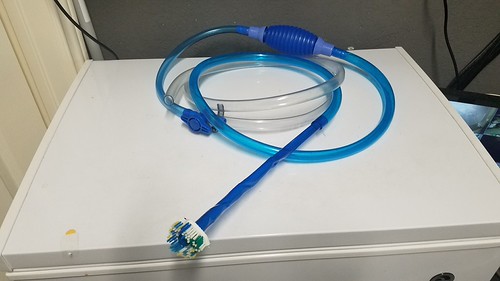
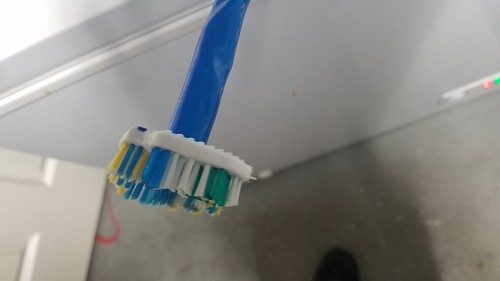
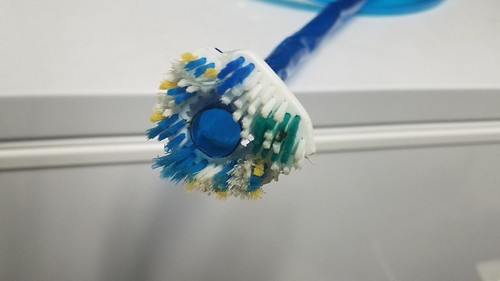
Step number six: Test the water and do some landscape. Pull on a sample GHA and see if the tension is not there anymore and you can removed. Once you can tell that the loosening up you are on the right track to win this battle. I do check daily and once I felt like the GHA is soft and easy to pulled off. This is when you need to get your hands dirty. I came up with a custom brush /sucking tool that helps me get in and scrub the rocks. It's just a simple water change sucker with some cut up toothbrush superglue to the end for scrubbing. Now you will need to have some pylon bags or very fine mesh bags in your sump at the end of the tubbing. Once you suck and scrub the GHA is caught in your sump with the bags. This method is the best way to keep your water and removed the GHA. Your tank needs a jump start to beating the GHA, your tangs and snails won’t touch the GHA if it is long.
 20180618_093529
 by
Tony Nguyen, on Flickr
 20180618_093523
 by
Tony Nguyen, on Flickr
 20180618_093521
 by
Tony Nguyen, on Flickr
Step number seven: Now I did mention about wasting money on snails and such. There is a good side of the story, if you have the GHA under control and its very small amount of GHA left your tangs and critters will be able to handle that. There is no shortcut in fighting this you will need to make a good balance and treat your tank like a your body, what comes in must come out. Do your 10% water changes and happy reefing.
Disclaimer:
I am not a professional of any kind, please don’t try these method unless you know what you are doing. I am not in anyway responsible for any loss or death of your live stock. This is just a write up that works in my tank. I am not affiliated with any company mention above and I am not trying to sell you anything. Do at your own risk!


































