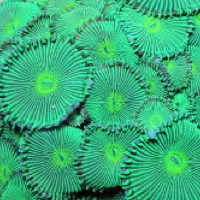
More education is needed in keeping corals..

I remembered being freaked out by the prospect of palytoxins when I first got palys. I have some sort of a mental block though. I can not remember that they're dangerous. Twice, I've had that (small) rock out of the tank. Both times it tried to squirt me in the face. Maybe it won't miss next time and I'll learn to remember.

 
I'm also a nerd... so there's that.

I need to watch this news story... how does someone end up with a coral and not realize it's alive? That made laugh for real.

Of course, people do things like use paint thinner in closed rooms without realizing that's not a great idea. If something that should be common sense can be overlooked, I can see how someone could *posibly* miss that corals are alive...

Actually... I've had people ask if my corals were alive... I assumed they were asking whether they were plastic, but now it occurs to me that might not have been the intention behind the question.
My old dear calls them plants....which i have to correct her on. As CLEARLY they're not plants! Though she did call one a mushroom (Sarcophyton) so I gave her that one.

But yes maybe its us. Maybe we havr to rethink. Having said this. I'd be kinda spooked if my plastic corals stated to spread. Be like the chuckie of the aquarium world. :O
 
I remembered being freaked out by the prospect of palytoxins when I first got palys. I have some sort of a mental block though. I can not remember that they're dangerous. Twice, I've had that (small) rock out of the tank. Both times it tried to squirt me in the face. Maybe it won't miss next time and I'll learn to remember.
Lol i laughed at this...

I think its probably more likely they will get miffed with you if you try forcedly removing them with a steel brush. May run in to the odd problem then as your mashing them in to water column. Not so much defensive rather hand blending them.
 
IMG_20190808_202931.jpg
 
Lol i laughed at this...

I think its probably more likely they will get miffed with you if you try forcedly removing them with a steel brush. May run in to the odd problem then as your mashing them in to water column. Not so much defensive rather hand blending them.
They're on the same rock as an unhappy frogspawn that is being inhibited by an abundance of vermetid snails. I pull the rock real quick to snap off or glue the snails and totally forget the palys each time. Hopefully, I'd remember if I was planning on boiling or scraping the rock! I can be pretty stupid though :eek:
 
They're on the same rock as an unhappy frogspawn that is being inhibited by an abundance of vermetid snails. I pull the rock real quick to snap off or glue the snails and totally forget the palys each time. Hopefully, I'd remember if I was planning on boiling or scraping the rock! I can be pretty stupid though :eek:
I've not in over a decade of marine keeping had a problem with zoas and palys by either touch or messing about with rocks. I'm fairly sure it have to be next level faffing to cause this.
 
What would be the proper way to clean that tank to mitigate the toxins?
I know bleach neutralizes the toxin....from personal experience, unfortunately. When we moved from NY to Colorado we stored our live rock in large coolers for the trip. Three weeks later when we finally were ready to put the rock back in the tank I noticed there were some shreds of tissue on one rock...honestly you could not even tell what it had been. Not wanting to put decaying material in the tank I decided to scrape as much as I could off and rinsed it down the sink. The family then came over for dinner shortly afterward, just as I was starting to feel a little short of breath. They only hung out for about 45 min...but later that night they experienced abdominal pain, vomiting, fevers and sore throat/ funny taste in mouth. My dogs wouldn’t eat for two days afterward. My husband and I both were short of breath but fortunately had an oxygen concentrator available because we had moved to such a high altitude. So we took the dogs and cat and retreated to our room with the oxygen on for the night. The next day we had to scrub all the kitchen surfaces down with bleach....needless to say we ditched the rock! Everyone was fine in the end, but you have to consider this was just one small patch of mostly dead tissue that caused all that trouble!
 
I know bleach neutralizes the toxin....from personal experience, unfortunately. When we moved from NY to Colorado we stored our live rock in large coolers for the trip. Three weeks later when we finally were ready to put the rock back in the tank I noticed there were some shreds of tissue on one rock...honestly you could not even tell what it had been. Not wanting to put decaying material in the tank I decided to scrape as much as I could off and rinsed it down the sink. The family then came over for dinner shortly afterward, just as I was starting to feel a little short of breath. They only hung out for about 45 min...but later that night they experienced abdominal pain, vomiting, fevers and sore throat/ funny taste in mouth. My dogs wouldn’t eat for two days afterward. My husband and I both were short of breath but fortunately had an oxygen concentrator available because we had moved to such a high altitude. So we took the dogs and cat and retreated to our room with the oxygen on for the night. The next day we had to scrub all the kitchen surfaces down with bleach....needless to say we ditched the rock! Everyone was fine in the end, but you have to consider this was just one small patch of mostly dead tissue that caused all that trouble!
Id use ozone
 
I just noticed this news feed. It happened in the UK. Paly toxins are NO Joke.

Omg now there are two of these going at same time! Sorry this isn’t how it works..


Read and inform yourselves..

Who is buying g ugly looking corals looking like they have ick? Who is selling them? There are only a handful of species in the world known that are toxic and 99.9% of all hobiests, stores etc do not buy/sell/trade them. You have a better chance if winning the lottery and being hit by lighting on same day at same time while doing a headstand and ridding a unicycle..

We’ve retold this unsubstantiated lie for so long within the community we have doctors believing it.. this is sad and we need to be more responsible about spreading false information..
 
Omg now there are two of these going at same time! Sorry this isn’t how it works..


Read and inform yourselves..

Who is buying g ugly looking corals looking like they have ick? Who is selling them? There are only a handful of species in the world known that are toxic and 99.9% of all hobiests, stores etc do not buy/sell/trade them. You have a better chance if winning the lottery and being hit by lighting on same day at same time while doing a headstand and ridding a unicycle..

We’ve retold this unsubstantiated lie for so long within the community we have doctors believing it.. this is sad and we need to be more responsible about spreading false information..
Read and informed myself.....part one, third set of pics, bottom right green mottled Palys...those were the ones. Given to me by an employee of a reef store in Burlington, Vermont when I first started my tank. They had big mats of them.
 
Ok, that article was about as easy to understand as a foreign language. I read it three times and still can’t tell the difference between which zoa/paly species it says are deadly and which are not. But one of those pictures is clearly a larger colony of a species that’s in my tank...should I be concerned? (The paly came into my tank as a hitchhiker on my sea urchin, I didn’t buy it and don’t know anything about it)
253D10C7-AE79-4077-AEA2-49BB27860CE3.png
ADCF57C6-72A7-4E4D-9AAC-A242FFC3D3A7.png
 
Last edited:
@Magellan From reading that article it seem you have p.mutuki which is said to have tested negative for the toxin. But I'd still be cautious.

Purple death paly's, nuclear green and paly grandis are paly's I have kept and fragged. The first two are of the toxic kind but the grandis has yet to be determined. One thing I have always done before fragging was dip them into Coral RX Probefore and after. Whether that is what helped me I'm uncertain. It would be nice to see a database with everything that is toxic for those of us that may have inadvertently purchased a toxic species without knowing.

Further more it would be awesome in knowing that our importers would also label these as a dangerous species which would have to be labeled as such at our LFS not to discourage anyone buying them but to make them aware.

Our medical system should also be more vigilant in their diagnosis and have all the information on hand. But that being said until such time if WE do fall ill after having handled frags of paly's that we have a "care" sheet labeling these symptoms and what should be done by medical professionals if it happens.....But who's gonna remember to bring information with them right..
 
Ok, that article was about as easy to understand as a foreign language. I read it three times and still can’t tell the difference between which zoa/paly species it says are deadly and which are not. But one of those pictures is clearly a larger colony of a species that’s in my tank...should I be concerned? (The paly came into my tank as a hitchhiker on my sea urchin, I didn’t buy it and don’t know anything about it)
253D10C7-AE79-4077-AEA2-49BB27860CE3.png
ADCF57C6-72A7-4E4D-9AAC-A242FFC3D3A7.png
I have that exact same kind. It was a rock with what was 2 different paly species, wasn't long after that a third (this one) showed its presence.
 
I don't think it hurts to treat all palys carefully. Better safe than sorry. Obviously people are getting colonies that have toxin, otherwise they wouldn't be getting sick. It is unlikely? Very. But unlikely things HAVE to happen to someone.

My son is the poster child for that. He got sick with something that less than 100 people in the US get a year when he was 4 months old. The doctors had no clue what it was at first. He was on life support for a month. The antitoxin for it can be weaponized and turned into a bioweapon, so they had to have the CDC and the governor agree to have it flown in. Some states won't even allow it to be flown in, which would mean the person would have to be transported to another state. Another baby got it who lived about 9 miles from me 3 months later. Because the doctor's had learned from my son, they knew how to treat that baby and she recovered much quicker. He's 100% fine now, but rare things do happen.

My opinion is, if there's any chance you may be exposed to something dangerous and uncommon, doesn't hurt to have a sheet with info. Even if you don't remember it, a family member might. Helps narrow down options for the doctors at least.
 
Some strains of dinoflagellates also contain palytoxin (ostreopsis) and some cyano.

ostreopsis become more toxic when nitrate is higher in the tank.

High alkalines or acids can break it down but id still opt for ozone if unsure.

Goes without saying but wear gloves and try and disturb critters the least when doing tank maintenance.

Having said this people frag zoas. So a couple of incidents over the thousands of aquariums with everyones favourite softy is pretty low in terms of incident.

Driving to work each day has far more risk associated.
 
I have no plans to frag my palys or my zoas...that rock is isolated and the idea is to let them spread out and take over. The only way it will ever be out of my tank is if it is going into a new tank, and I will definitely be wearing gloves! Thanks for the help! @bubbasguppies
 

IF YOU HAD TO TAKE A REEFING EXAM, WOULD YOU PASS?

  • Yes!

    Votes: 32 45.7%
  • Not yet, but I have one that I want to buy in mind!

    Votes: 9 12.9%
  • No.

    Votes: 26 37.1%
  • Other (please explain).

    Votes: 3 4.3%
Back
Top