I consider myself someone who understands a bit on both sides of the hobby, in the West and in the East. I am not claiming that I know everything or even a lot. I’ve been on Chinese (mainland) and Taiwanese forums as well as seen a number of tanks from there, can’t say much about the hobby in other Asian countries because I don’t know the language. And trust me, I’ve seen more than my share of purely incorrect or even downright abhorrent practices of many hobbyists in China and Taiwan.
I once had the “privilege” of knowing a guy who was idiotic enough to put 4 Tangs, including 3 well-known ich magnets (Powder Brown, Clown, Blue Hippo) into his nano tank. And surprise, surprise, not long afterwards he told me they got sick and died. Now you’d expect this guy to learn his lesson right? This genius then proceeds to buy another Clown Tang and a juvenile Emperor Angel before killing them again, and then he told me “wow fish are so hard to keep.” To be fair, there’s a few people in China who know what they’re doing and actually put in effort to make sure their fish are well-fed and choose species that are suitable for the tank they have, but they’re definitely a minority. A lot of what’s standard practice / knowledge to us in the more “Western” side of the hobby simply doesn’t apply to them, and I doubt the vast majority of them will have the English language skills to visit forums like this one. The hobby in mainland China only started in the early / mid-2000s, putting that into perspective, many people have kept Clownfish and Tangs for over 15-20 years. That’s how old the entire hobby is in China.
Much of what I said above is unfortunately true in Taiwan as well. Land is expensive, space is at a premium, yet people still put fish in way smaller tanks than they should go into. Taiwan probably got a head start with the hobby in the early 90s so a bit over a decade earlier than the mainland, so you do get a slightly more knowledgeable base overall, but again many of our standard practices haven’t become the standard there. I do know, however, a guy who built a huge tank in his home and actually knows what he’s doing and has had numerous fish for 10 or more years, albeit a FOWLR and not a reef. I never got the chance to visit him when I was in Taiwan, and I don’t think he would have liked the idea of someone he only knows online suddenly visiting his house. ^^
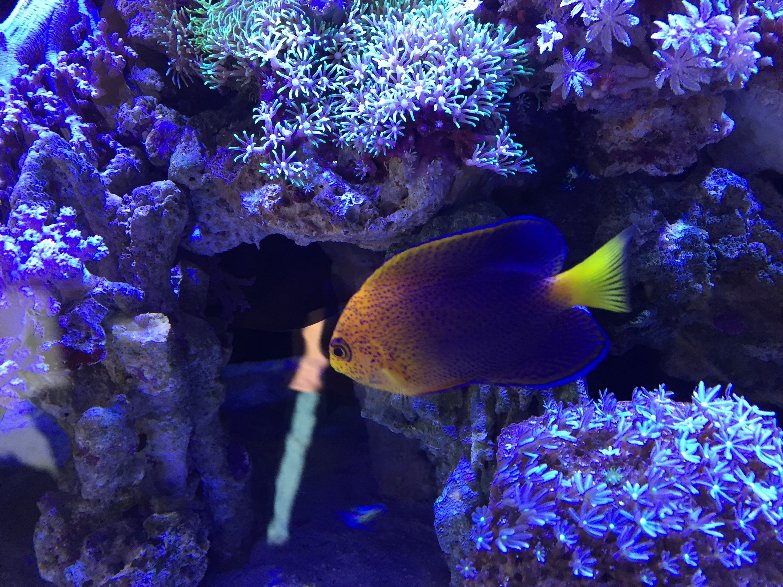
What both Taiwanese and Chinese, as well as many Singaporean hobbyists share, are their extremely conservative attitudes towards putting angels and butterflies in reefs. Species many of us wouldn’t hesitate to put in reefs, are still seen as too risky and too big of a gamble to many of them. This honestly is something I’ll never understand because I love Angels and Butterflies a lot.
I am not sure about the average hobbyist in Hong Kong, but they do seem to get lots of rare fish and stuff I have seldom if ever seen in China and Taiwan. They also have big importers like SeaLife and a few others. Browsing through old posts on Reef Builders, there’s definitely a few hardcore fish collectors there who are willing to pay much higher prices than the average hobbyist or even dedicated hobbyist in most other places. I think I wouldn’t be wrong in saying that places like HK, Japan and Singapore get lots of rare fish that hardly if ever make their way to the West. Usually deepwater stuff, aberrant variants, or very rare species.
I am thoroughly impressed and can only drool at the fish collections of some Japanese hobbyists. I can also tell how much effort they put into their tanks, many are just awesome to see. Like some other Asian collectors, the ones in Japan are willing to shell out large sums of money for rare fish. A lot of stuff that was deepwater went from Hawaii (and other Pacific islands) to Japan rather than the mainland US or Europe. While I don’t think some of these high end fish collectors are necessarily representative of the “average” Japanese hobbyist, they are meticulous into providing for all of their fish especially their prized “collector’s items.” The guy who got his hand on one of the few Peppermint Angels ever collected for the trade, set up a chilled and very dimly lit species tank for the fish so as to recreate its natural habitat. I bet his specimen, if left in our hands, we’d have many people asking to put it in their full-blown reef tanks.
Another thing I notice about Japanese hobbyists, or at least the ones who have collections of deepwater fish, is that they put them in tanks with few, or at most, some non-photosynthetic corals, to make them feel at ease much like the guy did with the Peppermint. They have clearly studied the environments these fish come from, where whole colonies of reef-building corals as well as high lighting are two things they’ll never see. Species diversity among both corals and fish reaches its peak at around 100 feet, I’d hardly expect to see much of a “reef” as we know it below 250, maybe 300 feet.
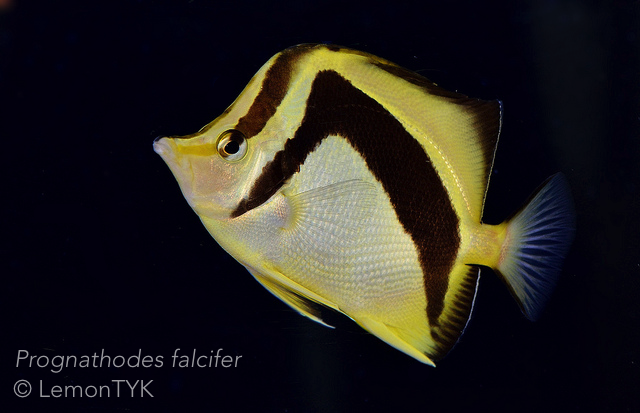
Many Japanese and HK hobbyists are big fans of butterflyfish and they seem to get species that are rare in the West. Many Roa species aren’t rare in East Asian waters, but they’re hardly known in the Western hobby. A practice of some of these dedicated butterflyfish keepers in Asia that would be controversial by Western standards is that many of their tanks are literally, or one step away from literally being “Fish Only.” That means almost no live rock or no live rock whatsoever. I’m not saying I’d attempt such a practice if I ever had a tank like theirs, but I was reading this old Reef Builders article featuring the rare butterflyfish collection (especially Prognathodes) of a guy in Japan, and he had some of those fish for 10+ years in such a setup (compartmentalized).
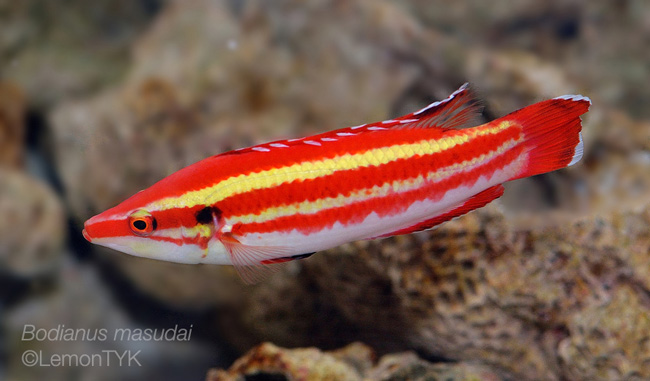
I disagree that Asian hobbyists are less into corals and more into fish as a broad generalization. You’ll still find plenty of people in the Eastern side of the hobby that don’t want fish that pose the slightest risk to their beloved corals. Much like the West, many still see the SPS tank (Acro dominated) as what they should aspire to once they “graduate” from softies and LPS. However, in terms of fish choices, I would say in Japan, apart from your typical Yellow / Blue Hippo Tangs, the Japanese tend to be into wrasses, basslets, Anthias, angels and Butterflies over Tangs. I have yet to see a Japanese tank with a “Tang Gang” that’s a staple for many Western tanks. And these families of fish favored by many Japanese hobbyists also happen to be some of my favorite. As for why, I can’t say for sure but you might be getting onto something, the preference for smaller but more intricately detailed fish.
Tangs in China, Taiwan and Singapore seem to be just as popular as in the West, and I see almost no tank without at least one or two. As for whether most of these people have tank sizes suitable for many of the Tangs, I think you know the answer. Not sure about Hong Kong but I would assume it to be similar.
Sorry to go on a long tangent lol, hope I didn’t bore you. Again, not claiming I know everything, but hope you found this informative. ^^ And to be fair, many Western hobbyists clearly don’t know what they’re doing either. So I think it really comes down to being responsible for the livestock we keep and only keeping species suitable for the environment we can give them.