No love for MH?

  • Thread starter Thread starter riche
  • Start date Start date
  • Tagged users None

Would you ever use Metal Halide lighting again?

  • Yes I use MH lighting now

    Votes: 264 20.5%
  • Yes maybe in the future

    Votes: 319 24.7%
  • No I would not

    Votes: 679 52.7%
  • Other (please xplain in the thread)

    Votes: 27 2.1%

  • Total voters
    1,289
I kind of feel like that’s been common knowledge for a while now. Kelvin rating has become entirely subjective. Most led users think of solid royal blue as 20k. I’ve read enough accounts of people switching from LEDs to trying out metal halides and calling the 20k radium bulb too yellow. In the planted tank world the 6500k bulb is considered on the blue end. In the early days of reefing 10k was blue. Opinions change and there’s no real reference standard beyond the Incandescent bulb as 3000k if I’m not mistaken. The radium 20k looks nearly identical to the Phoenix 14k, which is about as blue as the reeflux 12k was. The ushio 14k looked about as yellow as my old xm10k’s. Every manufacturers kelvin rating is different. You just kind of learn what to expect from various options
This may be - there may be subjective differences - but 20K, 14 K 6500K have scientific definitions - they are not subjective. OR?
 
I kind of feel like that’s been common knowledge for a while now. Kelvin rating has become entirely subjective. Most led users think of solid royal blue as 20k. I’ve read enough accounts of people switching from LEDs to trying out metal halides and calling the 20k radium bulb too yellow. In the planted tank world the 6500k bulb is considered on the blue end. In the early days of reefing 10k was blue. Opinions change and there’s no real reference standard beyond the Incandescent bulb as 3000k if I’m not mistaken. The radium 20k looks nearly identical to the Phoenix 14k, which is about as blue as the reeflux 12k was. The ushio 14k looked about as yellow as my old xm10k’s. Every manufacturers kelvin rating is different. You just kind of learn what to expect from various options
I wish you could give some data for this. from a manufacturer. This is not to just give you homework - but rather - the average person without 30 years experience will never be able to tell the difference between these issues/color temps. If this indeed is the way the MH bulb 'science' has evolved among manufacturers - I thank God I gave them up 15 years ago.
 
"Coral" is too fine of a term. Some might "do fine" under 100-250 PAR, but some will not. It is best to identify which kind. I keep acropora and clams and they nearly all do better at 400-600, but some like to be in the 250 range. Yes, you can keep some alive with less, but just keeping them alive is not my goal - I want them to thrive. I have seen this kind of advice come from all kinds of places, but please do not trust it if it is from a light manufacturer - most of their "expert advice" serves themselves and not the hobby.
I actually agree with you - but - the conventional wisdom suggests we're both wrong.
 
This may be - there may be subjective differences - but 20K, 14 K 6500K have scientific definitions - they are not subjective. OR?
You are being a bit too err "precise" as to what manuf really does.
1)Yes K is a measurable and useable metric
2) Even the "measured" same K can look different.. Mathmatical averages of different colors coming out to the same conclusion.
3) Manf tolerances allow some deviation from the exact number to be called that number..

Lets pick on white LED's for a minute:
Detail%20MacAdams%20Ellipse.jpg

note that anything in the green square could be called, as an example 4000k.
Each point in that square will look slightly different.
Each of the ellipses shown have a higher "consistency" one from another as you go down to the smaller circles.
That is the point of "binning" and it should have a similar concept w/ MH's. The "brand" needs to set the range of acceptance
but asking for perfection w/out "really" paying for it is pretty nie impossible..
And like how many bulbs fall into the "acceptance" range of a part. brand and what does the factory do w/ the rest?

As to MH's you SHOULD have to pay a premium (as w/ LEDs) as one gets ever more consistent one bulb vs another.

If you bought 4000K LED bulbs that had 4 step binning more than likely some would def look different than another.
If the diodes were 1 step (or I assume Xicato specification ???) more than likely they would all look identical..

That is like 1 of the ways differences show up
Again the orangy semi- vertical lines also mark the same CCT but will have different "tones" when you go from down to up..
Same if you go from the top to the bottom of the circle in the ellipses.

There are 6500k tubes that don't look like any 6500k lights of any other due to phosphor differences YET "score" at 6500k
Thing is one of them should look like another of them but not like another of a different 6500k
OF course like anything manuf change things making it even more difficult year over year.
And then there is simply "branding" of foreign goods w/ its own set of "issues"..

In a perfect world everyone would score in the black dot.
Perfectly like the standard 4000k , perfectly identical

Throw in the other fact that they are measured using an exacting power supply that may or may not be like the one you use and you get more "error".

The more I write the more I just accept the fact that "K" though "real" is still just a ballpark figure and the same measured K can look slightly different one from another.
 
This may be - there may be subjective differences - but 20K, 14 K 6500K have scientific definitions - they are not subjective. OR?

That's correct - the below chart is how you get from spectrum to color temperature. Unfortunately, I think (partly) manufacturers have "assigned" Kelvin temperatures to bulbs the way they have, because they are trying associate their bulb with a color temperature the hobbyist "think" they know. The root cause if we could back up a little bit, is that the average hobbyist just does not understand a lot of the science behind lighting.


I wish you could give some data for this. from a manufacturer. This is not to just give you homework - but rather - the average person without 30 years experience will never be able to tell the difference between these issues/color temps. If this indeed is the way the MH bulb 'science' has evolved among manufacturers - I thank God I gave them up 15 years ago.

I guess this is the reason I have made such a point of mentioning spectral plots - more than any other measure (PAR, CCT, etc) it tells you what a bulb will look like when it is on, as it shows you the intensity of the bulb at each wavelength. To me, this is much more valuable than 10,000k, 20,000k etc.

And, this is an area you can win with LED. You are not reliant on the manufactures mix of salt and metals inside an arc tube for a color (spectral mix?) you like. You can fine-tune to the appearance you like. The underlying drawback to this, is that just because you like what you see doesn't mean your corals do, and is the reason many (of the better) LED manufacturers are now limiting to, or suggesting, certain combinations of LED "channel" intensities (something that the metal halide does for us - and why their is a high success rate with their use).
 
Last edited:
Think it is best to listen to Tullio's talk for ones self. I am lucky to sit and discuss lighting with Tullio at Macna's in person so I can have a better understanding.
 
I know that most people don't go back this far in this hobby, but the 20k Radium was not made for reefing. It was just found to look really nice and perform really well over aquariums in Europe. When HOBBYISTS gave it the monicker of 20k, there was mostly planted (5500 & 6500k) bulbs on the market and just a few 10k that were really blue at the time. The branding of 20k probably looked about right back then - 1998 in US and even before in Europe. In the years since, 12k, 14k, 15k, 17.5 and more 20k have all come out and now that label is not right and should be more in the 14-15k range.

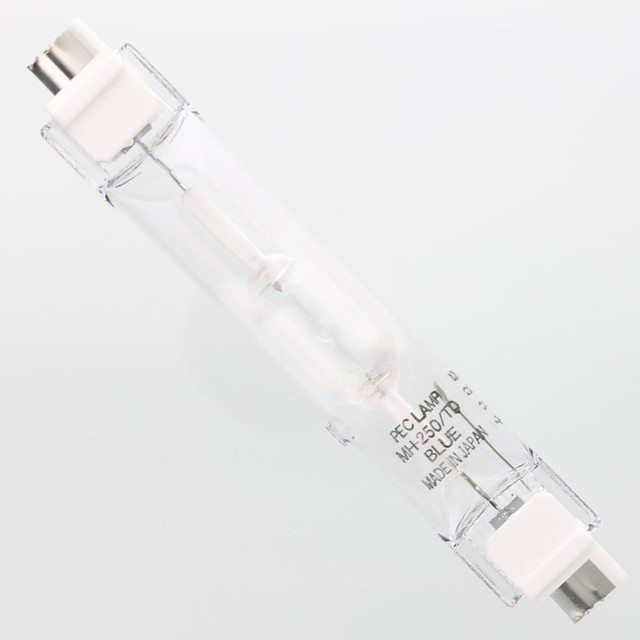
The manufacturer of the radium bulb just calls it "B" for blue... they do not call it 20k and have shied away from labeling it with any temperature color. This bulb was, and still is, highly used for general purpose lighting in the EU and is very popular there.

Along the same lines, the company that manufactures the Phoenix bulb, just calls it HexArc Blue. Hobbyists gave it the monicker of 14k... but this time, it is more on the money.
 
You are being a bit too err "precise" as to what manuf really does.
1)Yes K is a measurable and useable metric
2) Even the "measured" same K can look different.. Mathmatical averages of different colors coming out to the same conclusion.
3) Manf tolerances allow some deviation from the exact number to be called that number..

Lets pick on white LED's for a minute:
Detail%20MacAdams%20Ellipse.jpg

note that anything in the green square could be called, as an example 4000k.
Each point in that square will look slightly different.
Each of the ellipses shown have a higher "consistency" one from another as you go down to the smaller circles.
That is the point of "binning" and it should have a similar concept w/ MH's. The "brand" needs to set the range of acceptance
but asking for perfection w/out "really" paying for it is pretty nie impossible..
And like how many bulbs fall into the "acceptance" range of a part. brand and what does the factory do w/ the rest?

As to MH's you SHOULD have to pay a premium (as w/ LEDs) as one gets ever more consistent one bulb vs another.

If you bought 4000K LED bulbs that had 4 step binning more than likely some would def look different than another.
If the diodes were 1 step (or I assume Xicato specification ???) more than likely they would all look identical..

That is like 1 of the ways differences show up
Again the orangy semi- vertical lines also mark the same CCT but will have different "tones" when you go from down to up..
Same if you go from the top to the bottom of the circle in the ellipses.

There are 6500k tubes that don't look like any 6500k lights of any other due to phosphor differences YET "score" at 6500k
Thing is one of them should look like another of them but not like another of a different 6500k
OF course like anything manuf change things making it even more difficult year over year.
And then there is simply "branding" of foreign goods w/ its own set of "issues"..

In a perfect world everyone would score in the black dot.
Perfectly like the standard 4000k , perfectly identical

Throw in the other fact that they are measured using an exacting power supply that may or may not be like the one you use and you get more "error".

The more I write the more I just accept the fact that "K" though "real" is still just a ballpark figure and the same measured K can look slightly different one from another.

Clearly - every measurement has an 'error'. Every group or measurements will have a mean and standard deviation. Ie if you took 5 "20,000K" bulbs and measured 'K' you would get a number like 20,010 +/- xxx. My guess is that its not 20000 +/- 5000 - but instead is a tighter range.

Then take in 'human vision' and what one person perceives as color as compared to another and there is more error.

To me the reason to label a product with a number like K - is so that it is reproducible from use to use, tank to tank (again within the standard used above). Of course nothing is every 'exactly' the same - thats not what I was talking about in other posts - but if a 20K bulb can look like a 14K bulb, classifying bulbs in this manner seems useless.

BTW - If there are studies out there suggesting that for example a LPS grows best at 14K - and a person wants to grow the 'best LPS' seems like he should be able to go out, buy a 14K bulb - and expect that the light will 'close' to 14 K. The purchaser may turn on the light and say - wow - that looks more like 20K - but thats not whats as important. IMHO
 
@MnFish1 I’m not saying it made sense to me or it should to you. I merely asked a question in that thread about how they liked the bulbs. To which someone replied they liked them but they suggested the 20k looked more like a 14k to them. It was just a suggestion from them based on their experience. I don’t know if they used a par meter or any other method of testing, it was just something that was said to me. I’m not saying it is valid or right, I was only sharing information that was given to me.
Now my experience is that the eBay 20k bulb isn’t as blue(ish) as the radium is, but could it just be I think that because I was given that notion prior to purchase. I don’t know. They only thing I know for a fact is that when they both start up, there is a noticeable color difference.
Nothing against the bulbs, they have worked for me. But I will be trying the Hamilton 20k next.

Corey
 
Now my experience is that the eBay 20k bulb isn’t as blue(ish) as the radium is, but could it just be I think that because I was given that notion prior to purchase. I don’t know. They only thing I know for a fact is that when they both start up, there is a noticeable color difference.
Nothing against the bulbs, they have worked for me. But I will be trying the Hamilton 20k next.
Yeah Corey - thanks - I'm sorry - Im not sure what the 'ebay 20k bulb' is. I was under the impression that (and it was just from reading others posts) that it was some kind of factory second that is being sold at a lower price.

Curious - If they have worked for you - why are you wanting to change?

As to the research - that @oreo5457 posted - one of the articles saw no statistically significant coral growth depending on light temperature. The other did - but it was 'highly species specific' some doing better with one some with others. They found that coral grew faster under lower light intensity (irradiance) - but the colors were much better at higher light intensity. Their recommendation for 'coral farmers' - grow coral under low intensity - then 2 weeks before shipment - ramp up the light intensity.

So - some of this research may suggest why one guy using one light says - my corals grow like crazy at xxxx par - and the other guy says my colors are fantastic at xxxx par.
 
As an eBay Associate we earn from qualifying purchases.
Along the same lines, the company that manufactures the Phoenix bulb, just calls it HexArc Blue. Hobbyists gave it the monicker of 14k... but this time, it is more on the money.

Not to nitpick, but I did want to point out that the Phoenix bulb is indeed labeled as 14,000k. I thought this sounded odd, since I'd just changed my own a month ago. Looked at BRS and yep, it's right on the box.
 
@MnFish1 - I mostly want to change to get a little more blue from he likes of the radium or maybe the 20k Hamilton. I wish I had gotten the par meter from my club when I put these bulbs on so I could measure them now (about 6 months of use) and compare them to name brand as far as drop off goes.
I’m sure I could cruise though the thread and find out if anyone has done that.

Corey
 
Not to nitpick, but I did want to point out that the Phoenix bulb is indeed labeled as 14,000k. I thought this sounded odd, since I'd just changed my own a month ago. Looked at BRS and yep, it's right on the box.

Look on the bulb. It does not say it. It is made in Japan and it gets a box for the English-Speaking market by the distributor, who labeled them. If you buy a bulb that has not been reboxed, they just come in plain white boxes. Not to nitpick, but the manufacturer did not give them this label... somebody else did, starting with hobbyists, just like the Radium.


Hamilton, Giesemann, Ushio, XM (when in business) and CoralVue all gave color temps on their bulbs... which all are mostly more accurate than the ones that Hobbyists gave.
 
Funny thing.. PEC is "Phoenix Electric Company" of Japan..
http://www.phoenix-elec.co.jp/en/index.html

website has, AFAICT zero info on MH's..
http://www.phoenix-elec.co.jp/en/product/index.html

Moreover, while environmental destruction and shortage of electric power are talked about, we think that we will be able to play a part of corporate social responsibility as a lamp manufacturer by concentrating investment of management resources on the development and commercialization of power saving and environmentally friendly LED lamps.

Parent company:
http://www.heliostec-hd.co.jp/en/
 
Last edited:
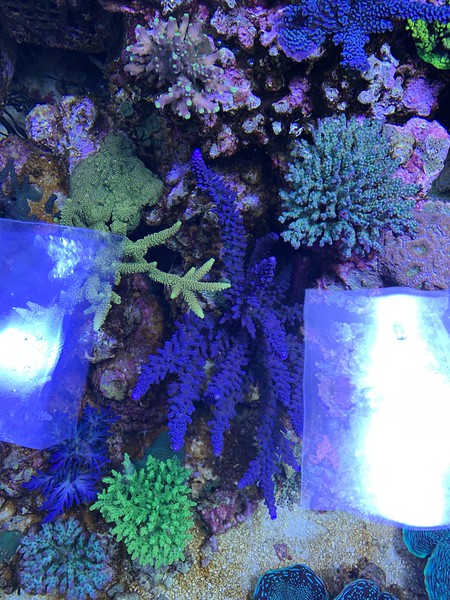
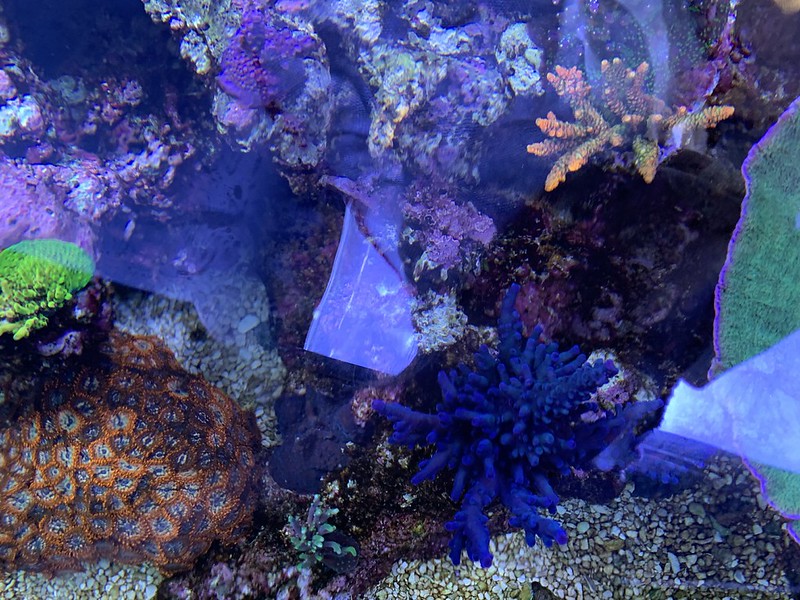
Here are some top-down MH shots to start the weekend... with the MH glare and everything. My apologies for the horrible iPhone shots. No tricks. No editing.


Next time I road trip to Colorado, I've got to coordinate a visit to your tank. #goals
 
Here is another funny fact that lots of people do not know. PEC stopped making 14k Phoenix bulbs when they thought that LED would rule the world in 2013/2014ish (I cannot remember really). They started to make them again after about a 12-18 month hiatus after general lighting and aquarium lighting demand got so high. I bought 40-50 of them for as low as $20 on closeout at a lot of places and still have my stash that I was saving up.
 
Look on the bulb. It does not say it. It is made in Japan and it gets a box for the English-Speaking market by the distributor, who labeled them. If you buy a bulb that has not been reboxed, they just come in plain white boxes. Not to nitpick, but the manufacturer did not give them this label... somebody else did, starting with hobbyists, just like the Radium.


Hamilton, Giesemann, Ushio, XM (when in business) and CoralVue all gave color temps on their bulbs... which all are mostly more accurate than the ones that Hobbyists gave.
"20K" is just a market name, like jda said..
It doesn't really matter what "K name" they give to a lamp.
It's just like cartoon names for corals. The scientific name, and specially what the coral actually is, is what should matter the most.
The market has been polluted with nicknames that are mostly for market identification and to drive sales.
People just have to realize that's not a big deal and not what should really matter, but the results of that bulb.
;)
 
I have to disagree with the Kelvin rating doesn't matter. There are some bulbs that are sold as 20k, 14k, 10k, etc with different spectrums and a noticable difference in color to the eye and comparing that to coral names just doesn't make sense to me. Hamilton markets there halide bulbs like that for a reason. To some it will "matter" as they want a certain look pleasing to their eyes. Can you imagine buying halide bulbs and you purchase a 10k and 20k but someone says it doesn't matter, it's how they work?


 

IF YOU HAD TO TAKE A REEFING EXAM, WOULD YOU PASS?

  • Yes!

    Votes: 32 45.7%
  • Not yet, but I have one that I want to buy in mind!

    Votes: 9 12.9%
  • No.

    Votes: 26 37.1%
  • Other (please explain).

    Votes: 3 4.3%
Back
Top