
- Joined
- Dec 13, 2019
- Messages
- 66
- Reaction score
- 204
- What state or country do you live in
- Other International
25G (96 litres), never used a skimmer


Follow along with the video below to see how to install our site as a web app on your home screen.
Note: This feature may not be available in some browsers.




@quirkylemon103
I have a similar high load tank 65 gal, but I do run a Reef Octo Classic 90 HOB and do water changes at 7.5% a week through an AWC and my nitrates are STILL 20 ppm. I don’t think your proposed stock list is doable without any kind of active nutrient export in the aquarium. Why so opposed to a skimmer? Mine is dead silent and super efficient.
snowflake clown
Midas blenny
Target mandarin
Orchid dottyback
Yellowtail Pygmy angel
Kole tang
Melanarus Wrasse
Lyretail anthias
Pink spotted watchman goby/tiger shrimp
Blood red/skunk cleaner shrimp
@nashvillian
Nutrient management does not have to be all about export. I prefer to nutrient recycle into desirable biomass like fish & coral.
Protein skimmers remove free swimming bacteria as a nutrient export mechanism. I prefer to nutrient recycle those bacteria into desirable invertebrate biomass and do so by multiple nutrient pathways of diverse micro fauna & fana brought in with uncured diver collected live rock from the Gulf of Mexico.

i am opposed to skimmers because they remove pods that i need for the mandarin and rainford goby i need as much pods as i can get@quirkylemon103
I have a similar high load tank 65 gal, but I do run a Reef Octo Classic 90 HOB and do water changes at 7.5% a week through an AWC and my nitrates are STILL 20 ppm. I don’t think your proposed stock list is doable without any kind of active nutrient export in the aquarium. Why so opposed to a skimmer? Mine is dead silent and super efficient.
snowflake clown
Midas blenny
Target mandarin
Orchid dottyback
Yellowtail Pygmy angel
Kole tang
Melanarus Wrasse
Lyretail anthias
Pink spotted watchman goby/tiger shrimp
Blood red/skunk cleaner shrimp
what size tank is that and how long have you had the sps25G (96 litres), never used a skimmer
beautiful tank

how do you set up a rfug? am i pumping water in or out of the gravel bed?Nutrient management does not have to be all about export. I prefer to nutrient recycle into desirable biomass like fish & coral.
Protein skimmers remove free swimming bacteria as a nutrient export mechanism. I prefer to nutrient recycle those bacteria into desirable invertebrate biomass and do so by multiple nutrient pathways of diverse micro fauna & fana brought in with uncured diver collected live rock from the Gulf of Mexico.
I practice Triton Method, but don’t skim or partial water change. Once a year, I do a 100% water change over a 7 day period. Consider fragging & selling coral as nutrient export.
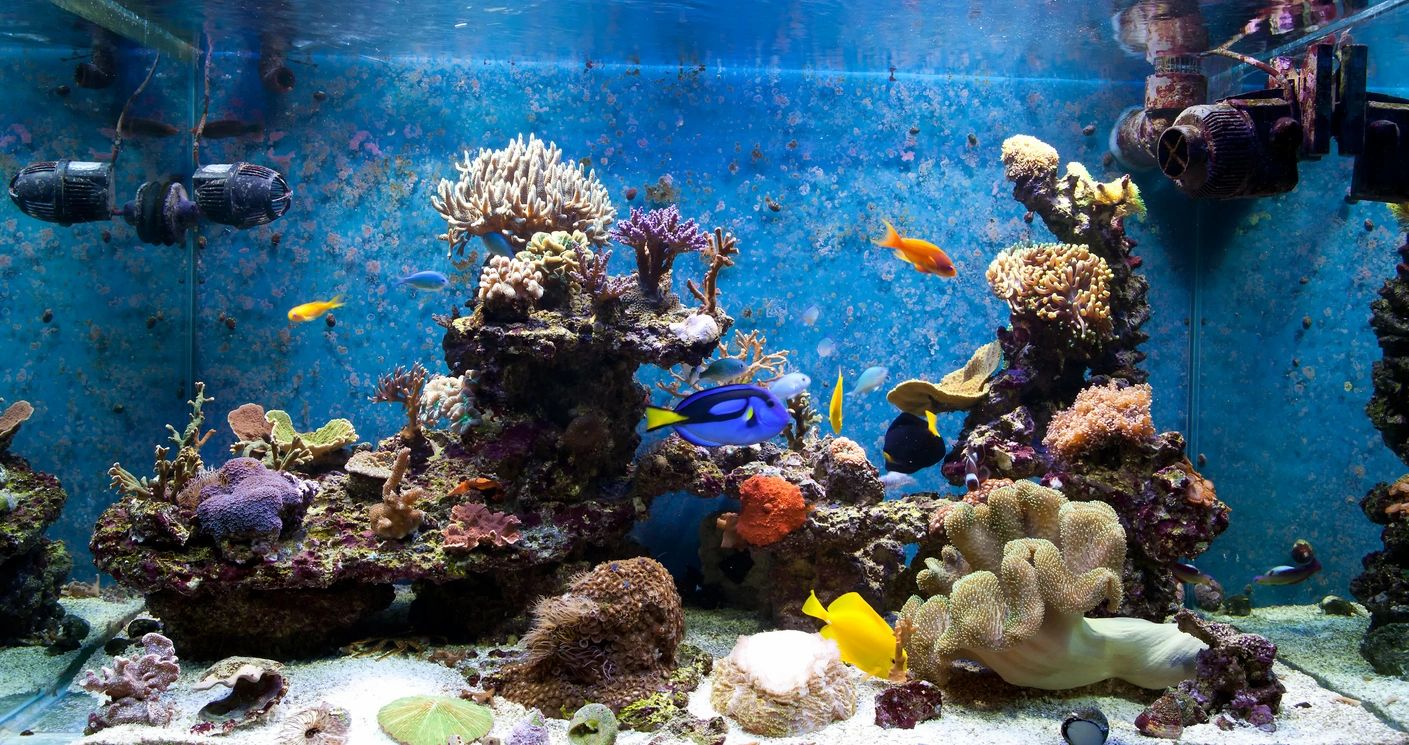
This 120G tank is 3 years set up. I have three main biofiltration systems: a reverse flow under gravel filter with 2” aroggonite sandbed at 8 square feet, a 40G algae refugium and a 4’ high 3” diameter macro reactor.

looks good
 do you have a build thread or can you post some information on the tank
looks good
Thanks! Here is my build thread. https://www.reef2reef.com/threads/simple-reef-tank-no-sump-no-skimmer-no-dosing.721994/looks good
 gulfliverock.com


It is an all in one tank 60 x 40 x 40cm.what size tank is that and how long have you had the sps
what do mean seed bacteria using ammonia? i thought that is what certain bacterias eatA reverse flow undergravel filter pumps display tank water into the plenum rising up thru the substrate with oxygen rich water to perform oxidation chemistry. Detritus is an important part of the food web and detrivores are needed to start the process. For a 2” sandbed, in your tank, you will need 150-200 pounds of substrate. Get about 15 lbs of live sand from GOM 10 miles west of Tamia Bay. For maximum diversity get
50-100 lbs of uncured diver collected live rock.
Set up in two stages.
Seed nitrogen fixation bacteria to 150 lbs of dry substrate using amonia. About one week.
Add live sand and uncured live rock. Provide plenty of surface agitation with excessive circulation. Use reduced lighting for first month. Add snails as required at end of first month to graze on micro algae. Restrain from fish or aggressive herbivores until month 6. Use flake food and see what shows itself as neat hitch hikers.
Gulf Live Rock.com
[Premium Decorative Live Rock is our most popular rock. This rock will have thick coralline algae on it and a mixed variety of plants, animals, hard and soft corals, sponges and so much more. This type of rock has an enormous variety of animal and encrusting marine life. The shapes and sizes are extremely unique. This rock could contain multi-colored Christmas tree worms, cup and tube corals, feather dusters, gorgonians, serpulid worms and encrusting clams.
This rock is fully blanketed with colorful coralline algae's, these algae's come in multitudes of fascinating shades of purple, reds, oranges, peaches and yellows. Most rocks contain bryzoans,orange leather sponge,gracilaria algae,halimeda, sea grapes, cluster corals, and cup corals. All of our premium decorative live rocks contain seeded plant life,both macro and micro algae.All pieces are hand collected fresh from our gulf lease site by our diving staff and shipped directly to our customers.We do not use any chemicals in our process. The rocks pictured are for example only. All of our premium decorative live rock is as good or better than the rocks pictured. This is Florida Aquacultured live rock.
All of our live rock comes from our personal Federal Aquaculture Lease site located 10 miles offshore in the Gulf of Mexico. All of our rock was planted on the ocean floor in 1994. So you can image how much marine life has grown on it in over the last 15 years. We have live rock in all different sizes and we can custom fit your order. Our premium decorative live rock starts at $5 a pound. We offer wholesale prices on larger volume orders.]
Pardon the confusing wording. Bacteria are introduced from a bottle and feed ammonia to establish nitrogen cycle.what do mean seed bacteria using ammonia? i thought that is what certain bacterias eat
[Seed nitrogen fixation bacteria to 150 lbs of dry substrate using amonia. About one week.]
i already have about 80 lbs of caribsea special grade and 10ish lbs of crushed coral and that i approximately 1.5 inches
do you think i should add more dry sand with 25-50 of live sand or should the rest be live sand
also live rock is very expensive to me is it ok if i only use 40 pounds with the rest being moaini rock that i already have?


I got mine used for $100 and made some DIY changes to make the largest section a refugium with a higher water level.what sump would you recommend form 500
do you mean a pre built sump that you modded or a 40 breeder or other size with glass siliconed inI got mine used for $100 and made some DIY changes to make the largest section a refugium with a higher water level.
Not sure which sumps make the best off the shelf sump for fuges, but I would make sure to have a skimmer section too just in case you end up wanting to put one in later


@Subsea can you find a diagram or pictures of how a rugf is set up
how do i connect the filter to the powerhead? and should i have pieces of pvc under it to get the filter off then bottom of the tank
















